
Vending Machine Price Increase Planning for Existing Customers
A practical U.S. planning guide for vending machine price increase planning for existing customers, built for founders, buyers, and operators comparing assumptions before committing capital.


How should existing vending customers think about a price increase?
If your existing vending prices are being squeezed by product costs, commissions, route mileage, repairs, or payment fees, a price increase may be part of keeping the route workable. The decision is not just “raise or don’t raise”; it is whether each machine, location, and product still supports acceptable margin after all route-level costs are included.
For a U.S. vending business, the right answer usually depends on local buying behavior, the type of site, the product mix, and how sensitive your customers are to visible changes. A small change at one machine can be easy to absorb in a high-traffic office, while the same move may create churn in a value-sensitive location.
Before changing prices, a founder or operator should verify the local assumptions that drive the economics. That includes lease and commission terms, equipment condition, restocking labor, route mileage, inventory shrink or spoilage, and whether the location can support the change without reducing sales volume.
| What the reader is deciding | What must be verified locally |
|---|---|
| Whether existing customer pricing needs to move to protect margins | Product costs, machine mix, site traffic, customer sensitivity, commissions, and route-level labor or mileage |
| How much room there is for a change without hurting retention | Location terms, competitor pricing nearby, payment behavior, and any site-specific restrictions or expectations |
In practice, the main assumption categories for a vending price increase plan are:
- Lease or location commission terms
- Equipment condition and repair exposure
- Labor needed for restocking and service
- Menu economics by product and package size
- Permits or local operating requirements
- Working capital for inventory and route coverage
- Funding readiness if the route needs refresh capital
With those local inputs in hand, the next step is to map the pricing decision into a practical framework for machines, products, and customer segments.

What framework should you use to plan a vending machine price increase for existing customers?
For existing vending locations, the practical question is not just “Can we raise prices?” It is whether the new menu price still works for the location, the customer segment, the machine’s product mix, and the route economics behind it. A workable pricing plan should connect each proposed price change to a specific product, a specific machine or location type, and a documented reason such as higher product cost, labor time, spoilage, maintenance, cashless fees, or commission pressure.
The goal is to avoid a broad, one-size-fits-all increase. In vending, the right move is usually a location-by-location review that separates high-traffic machines, sensitive accounts, premium items, and lower-margin products that may need a different treatment than the rest of the route.
Which inputs should a pricing review capture before changing the menu?
| Planning area | Question to answer | Input to collect | Model impact | Verification source |
|---|---|---|---|---|
| Product mix | Which items drive most of the sales in each machine? | Current SKU list by machine, package size, and item category | Determines which prices matter most and which items can absorb change | Machine audit, sales reports, route notes |
| Current menu price points | What is the current price by SKU and by location? | Posted vend price, cashless price, and any promotional or legacy pricing | Shows the baseline for margin and customer reaction analysis | Machine programming screen, photos, sales system records |
| Customer segment sensitivity | Which locations are likely to resist a higher price? | Location type, customer mix, traffic pattern, and prior complaint history | Helps distinguish sensitive accounts from more flexible accounts | Account manager notes, operator history, customer feedback |
| Route and service burden | What extra labor or mileage does each machine require? | Service frequency, miles per stop, refill time, and repair frequency | Supports margin-sensitive pricing and identifies low-return accounts | Route logs, driver records, maintenance history |
| Vendor and product cost changes | Which products are carrying the most cost pressure? | Current invoice cost, freight charges, case pack size, and supplier terms | Shows where price increases may be needed to protect gross margin | Supplier invoices, purchase orders, vendor quotes |
| Location commission or revenue share | Does the account agreement depend on gross sales or net sales? | Commission structure, rent terms, and any shared-revenue language | Changes the retained margin after any price move | Location agreement, renewal documents, operator records |
| Machine constraints | Can the machine support the intended price and product mix? | Payment acceptance, coin change capacity, product fit, and dispensing reliability | Affects implementation risk and the need for product substitutions | Machine specs, technician review, test vend checks |
How should a founder move from market research to documented assumptions?
-
Segment the route first.
Group machines by location type, traffic pattern, and customer sensitivity so the pricing review is not treated as one national or route-wide average.
-
Audit the actual menu by machine.
Record the SKUs, package sizes, current vend prices, and any product substitutions that already happened because of supply changes or customer preferences.
-
Match each item to its margin pressure.
Identify where product cost, spoilage, repairs, commissions, cashless fees, or labor time are pulling margin down on specific items or locations.
-
Set a pricing rule by segment.
Decide whether the adjustment will apply to all items, only selected high-volume SKUs, only premium items, or only certain locations that can support the change.
-
Document customer-facing risk before changing the menu.
Note any accounts where a price change may trigger complaints, lower vend velocity, or a contract discussion with the location owner.
-
Verify machine and payment readiness.
Confirm that the machine can handle the updated prices, that payment settings are correct, and that any product assortment changes still fit the equipment.
-
Write down the assumption set.
Keep a short record of what changed, why it changed, which machines are affected, and what evidence supports the decision for lenders, partners, or internal planning.
Verification note: Pricing changes in vending are often driven by local factors, not a single industry rule. Verify current product costs, route costs, location terms, machine settings, and any customer-specific obligations with current source documents before you roll out a new menu.
What should the pricing review leave ready for the financial model?
By the end of this framework, you should have a machine-by-machine assumption set that shows which products are changing, which locations are exposed, and which cost drivers justify the change. That documented input set is what makes the later scenario work credible, especially when you test the impact on sales mix, gross margin, commissions, and working capital.
Next: use those documented assumptions to test the financial model tradeoffs, scenario sensitivity, and downside risk checks.

How should a vending price increase flow into the financial model?
For existing vending customers, a price increase is a margin test: higher revenue per vend can help, but only if unit volume does not fall enough to offset it. The model should track the full route economics, not just the sticker price on the machine.
That means testing the change against location commission, card fees, product cost, spoilage, route mileage, repair downtime, and labor coverage. A machine-level or location-cluster view is usually more useful than a blended company average.
Which assumptions move the answer the most?
- How many units each machine sells after the price change.
- Whether the location contract allows pricing changes and under what notice.
- How commission is structured: percentage, fixed rent, or minimum guarantee.
- The share of cash versus card sales and the related processing fee burden.
- Whether the new price changes product mix toward higher-margin items.
- Whether slower turns increase spoilage, stockouts, or service time.
- How much cash is available if some locations react more slowly than expected.
Illustrative planning worksheet for a price increase
| Planning input | Illustrative placeholder | Why it matters | What to verify |
|---|---|---|---|
| Current average vend price | Existing blended price per item | Starting point for the revenue lift | Machine-level sales reports |
| Proposed new price | Target price after increase | Drives revenue per transaction | Location fit and customer tolerance |
| Units sold per machine | Average monthly sales volume | Determines total revenue impact | Route history by machine or cluster |
| Expected sales response | Estimated unit drop or flat volume | Offsets the benefit of a higher price | Test results from a small location sample |
| Location commission or rent | Percent or fixed payment | Can absorb part of the price lift | Current signed agreement or invoice history |
| Card processing cost | Fee per card transaction | Raises the variable cost of each sale | Processor statement and terminal terms |
| Service, repair, and spoilage reserve | Monthly allowance | Protects cash flow if fill frequency changes | Maintenance logs and supplier lead times |
| Cash available for the test | Working capital set aside | Shows how long the business can absorb a slow response | Bank balance and operating reserve policy |
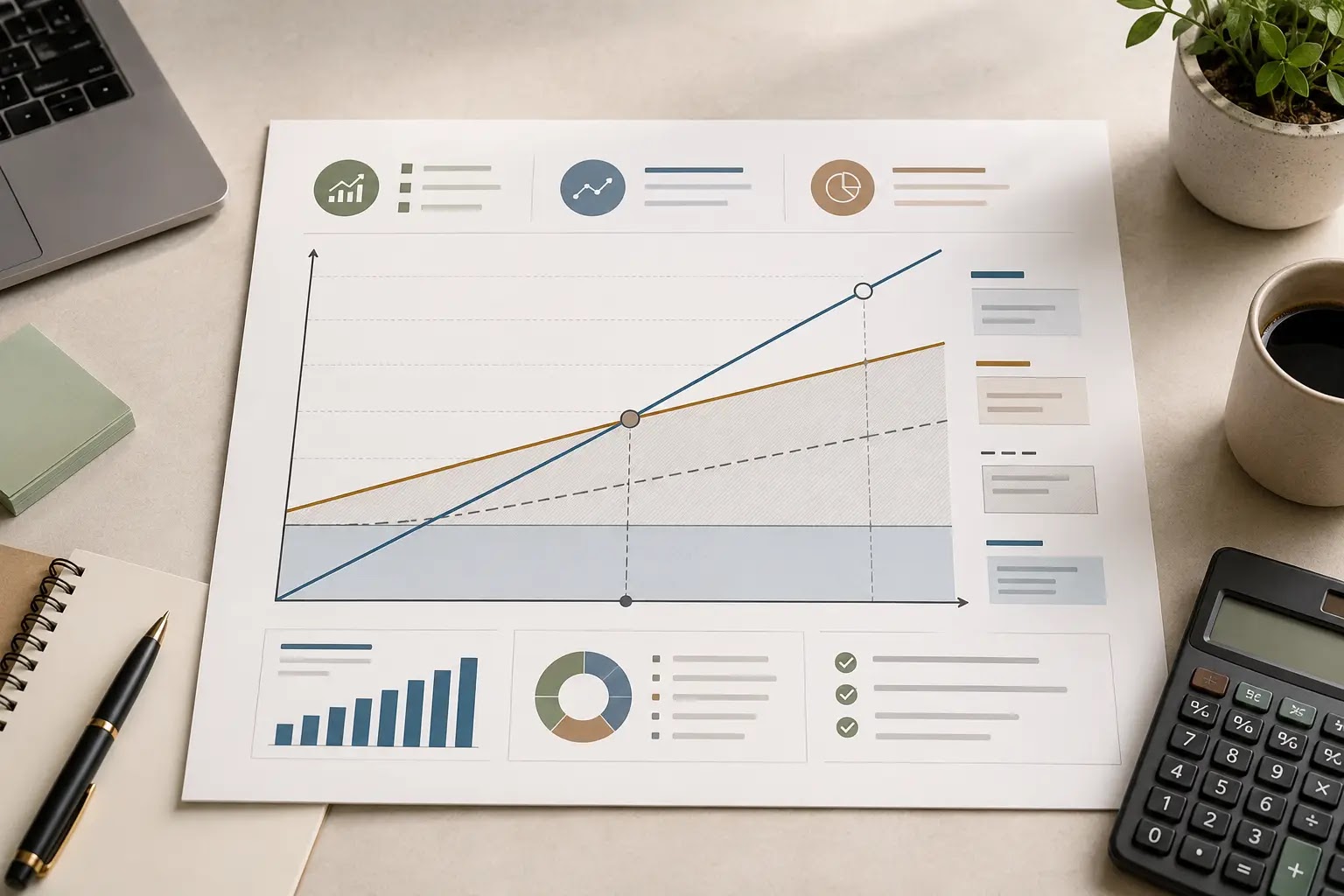
Simple sensitivity check: what changes if sales soften?
| Scenario | Sales response | Margin effect | Planning read |
|---|---|---|---|
| Conservative | Noticeable unit decline in price-sensitive locations | Price lift is partly offset by lower volume | May need a smaller increase, staggered rollout, or site-specific pricing |
| Base case | Modest unit softness with stable route efficiency | Net margin improves if fixed route costs stay controlled | Usually the target case for most clusters |
| Upside | Little or no unit decline | Revenue and margin both improve | More likely where convenience is strong and product mix is premium |
What should you do next before raising vending prices for existing customers?
Practical recap: a price increase works best when it is tied to a clear route-level reason: higher product cost, higher commission pressure, more repair load, longer mileage, or weaker margin in a specific location. For an existing customer base, the decision should be made location by location, not as a blanket move across the whole route.
Before you change prices, confirm which machines are truly margin-sensitive, which customers may need a softer transition, and whether the new price still fits the location’s traffic, product mix, and service expectations.
Decision checklist
| Planning area | Ready when... | Needs attention if... |
|---|---|---|
| Product mix | You know which SKUs can absorb a higher price and which are traffic drivers. | All items are being considered for the same increase. |
| Route economics | You have a recent view of mileage, restocking time, and service frequency. | Route costs are being estimated loosely or not by location. |
| Location terms | You understand commission pressure, customer expectations, and any informal pricing constraints. | The location relationship depends on a sensitive price point. |
| Equipment condition | Repair frequency and machine downtime are factored into the margin review. | Old machines are being priced as if they were low-maintenance. |
| Working capital | You have enough cash to handle slower turns or temporary volume softness. | The route is already tight on inventory cash or service float. |
Next planning steps
- Review each location separately and identify which machines need a price update first.
- Match the price change to the actual margin problem: product cost, labor, mileage, commission, repairs, or spoilage.
- Check whether any customer segment is more price-sensitive than the rest of the route.
- Confirm that the new price still supports your target gross margin after refill, service, and overhead inputs.
- Document the expected volume response so you can compare the before-and-after route economics.
- Prepare a simple communication plan if a location manager or host needs to understand the change.
Useful planning bridge: if you are turning this into a real operating decision, a business plan, financial model, pitch deck, checklist, and startup toolkit can help you organize assumptions, compare scenarios, and document the pricing case for partners, lenders, landlords, or advisors.


