
Vending Machine Business Plan Mistakes to Avoid
A practical U.S. planning guide for vending machine business plan mistakes to avoid, built for founders, buyers, and operators comparing assumptions before committing capital.


What vending machine business plan mistakes should you avoid?
If you are buying, starting, or expanding a vending machine business in the U.S., the biggest planning mistake is treating every location like the same business. A workable plan has to separate the machine itself from the route, the site agreement, the product mix, and the cash needed to keep inventory and repairs moving.
Most weak plans miss the operating details that change economics fast: route mileage, service time, commission or placement terms, spoilage or shrink, repair frequency, payment processing, and how many machines must be live before fixed costs feel manageable. Those inputs should be documented before you finalize a pitch deck or funding package.
Quick decision frame
| What the reader is deciding | What must be verified locally |
|---|---|
| Whether the route or startup plan can support ongoing costs | Location commissions, access hours, service frequency, rent or placement terms, and route density in the target market |
| Whether the machine mix and inventory plan fit the sites | Equipment pricing, product demand, supplier terms, stocking cadence, and repair support available locally |
For planning purposes, the most important assumption categories are usually the same, even though the numbers vary by market and vendor. The plan should show how each one affects cash needs, margin, and timing.
- Lease and buildout conditions
- Equipment purchase or financing
- Labor, route time, and service coverage
- Product mix and menu economics
- Permits and site-specific requirements
- Working capital for inventory and repairs
- Funding readiness and lender or investor expectations
With those local inputs pinned down, the next step is a practical framework for testing the assumptions that belong in the business plan.
What should a vending machine business plan document before the numbers?
For a vending machine startup, acquisition, or route expansion, the strongest business plan is the one that turns location, machine, inventory, and service assumptions into auditable inputs. The most common mistakes are usually not about the idea itself; they come from weak assumptions about site access, commissions, route mileage, repair downtime, product mix, and working capital.
Which planning mistakes should be trapped early?
Use the plan to separate what you know from what still needs verification. If a claim affects revenue, margin, startup capital, or funding need, it should have a source attached before it enters the model.
| Planning area | Question to answer | Input to collect | Model impact | Verification source |
|---|---|---|---|---|
| Location strategy | Which sites are included, and how often can each machine be serviced? | Site type, access hours, route radius, number of stops, service frequency | Revenue per machine, route labor, mileage, downtime risk | Site notes, owner conversations, route map, written placement terms |
| Placement economics | What commission, rent, or revenue-share terms apply at each location? | Percentage share, fixed fee, electricity responsibility, minimum payment terms | Gross margin, break-even point, cash flow timing | Location agreement, landlord or operator quote, vendor term sheet |
| Machine mix | What machine types are required for the proposed route? | Machine count, condition, payment system, capacity, new versus used mix | Startup capex, maintenance reserve, replacement timing | Supplier quotes, equipment specs, resale listings, inspection notes |
| Product mix | What products will be stocked, and how often will they turn? | Inventory list, unit sizes, refill cadence, shrink or spoilage assumptions | Inventory budget, gross margin, replenishment frequency | Supplier catalogs, purchase quotes, test-run sales data, operator interviews |
| Repairs and downtime | How will maintenance, parts, and service calls be handled? | Service plan, technician access, warranty terms, parts reserve | Operating expense, downtime, replacement reserve | Repair vendor estimates, warranty documents, service history |
| Cash handling and software | How will collections, cashless payments, and reporting be tracked? | Processor fees, software subscriptions, settlement timing, route reporting process | Fee drag, admin labor, cash timing, reporting quality for lenders | Processor contract, software demo, bookkeeping workflow, bank deposit records |
| Working capital | How much cash is needed to keep routes stocked and operating? | Initial inventory order, refill budget, spare parts reserve, cash cushion | Funding requirement, runway, stress-test outcome | Supplier terms, route plan, opening schedule, expense assumptions |
| Acquisition diligence | If buying a route, what proves the revenue is repeatable? | Trailing sales records, service logs, machine condition, customer transfer terms | Purchase price support, integration cost, seller financing need | Seller records, inspection findings, customer documents, route notes |
How should a founder move from research to documented assumptions?
- Define the route strategy first: startup route, bought route, or expansion plan, because each one changes the capital need and the quality of the revenue assumptions.
- List every location by type and service pattern, then note what makes each site different in access, traffic profile, and collection frequency.
- Gather written terms for commissions, rent, electricity, and any placement fees so the plan does not rely on informal conversations.
- Inventory the machines you will use, including condition, payment method, and any service history that affects maintenance or downtime.
- Build a product assumption sheet that ties each vending category to purchase cost, refill cadence, and expected waste or shrink.
- Separate startup costs from operating cash needs so the funding request covers both equipment and the working capital needed to open.
- Attach a source note to each major assumption: quote, agreement, inspection, vendor call, or owner conversation.
- Flag anything that depends on local market conditions, then verify it before presenting the plan to a lender, partner, or seller.
Next, Block 3 should translate these documented assumptions into revenue, margin, route-mileage, repair, and working-capital scenarios so the model can show where the plan is strong, where it is fragile, and what the funding request really needs to cover.
How do planning mistakes change the funding need?
If the model undercounts machine acquisition, route mileage, repairs, commissions, inventory spoilage, or software fees, the plan can look viable while the cash balance tightens quickly. For vending machine founders, the real question is not only “Can the route sell?” but “How much startup cash, working capital, and repair reserve does the route need before it stabilizes?”
What the financial model should absorb
Use the model to stress-test startup cost, monthly fixed overhead, variable service costs, and the sales mix across locations. A weak plan usually misses one of those four items.
What lenders, partners, and buyers will look for
They usually want to see documented assumptions, current vendor quotes, a clear cash runway, and a believable path from first installs to steady route performance.
| Planning input | What to enter | Model impact | Why it matters |
|---|---|---|---|
| Machine acquisition | Purchase price, lease terms, refurb costs, delivery, and setup | Startup cash need and depreciation or lease burden | Understating this makes the funding request too small |
| Initial inventory | Opening stock for snacks, drinks, or other vendable items | Working capital and first-fill cash requirement | Low inventory assumptions can hide early stockout risk |
| Route mileage | Estimated miles, service frequency, and fuel or vehicle cost | Monthly operating expense and net margin | Longer routes can erase profit even if sales look strong |
| Location commissions | Revenue share, flat fees, or minimum guarantees in location terms | Gross margin and break-even sales level | Commission assumptions often decide whether a site is worth keeping |
| Repairs and maintenance | Service reserve, parts, and emergency repairs | Monthly cash burn and reserve balance | Old or mixed-condition machines usually need more backup cash |
| Software and payments | Telemetry, route management, card reader, and processing fees | Operating margin and recurring overhead | Small recurring fees become meaningful across multiple machines |
| Working capital buffer | Months of cash needed before the route is self-funding | Cash runway and funding need | This is the cushion that keeps a slow launch from stalling |
Simple scenario check: which assumption changes the outcome fastest?
| Scenario | Assumption shift | Likely planning effect |
|---|---|---|
| Lean launch | Fewer machines, lower inventory, limited route area | Lower startup cash need, but less room for repairs or slow sales |
| Mixed-location route | Some higher-commission sites and longer service drives | Higher monthly overhead and a higher break-even sales threshold |
| Growth push | Add machines before the first route is stable | More funding needed and a longer runway before breakeven |
Planning calculator: use the formulas before you finalize the pitch deck
| Step | Illustrative placeholder input | Simple formula or output |
|---|---|---|
| Startup cash need | Machine cost + install/setup + opening inventory + permits/fees + launch reserve | Sum of all startup inputs |
| Monthly gross profit | Sales by product mix minus product cost and commissions | Revenue less direct product and site-sharing costs |
| Monthly net burn | Gross profit minus repairs, fuel, software, insurance, and overhead | How much cash the route uses each month before it stabilizes |
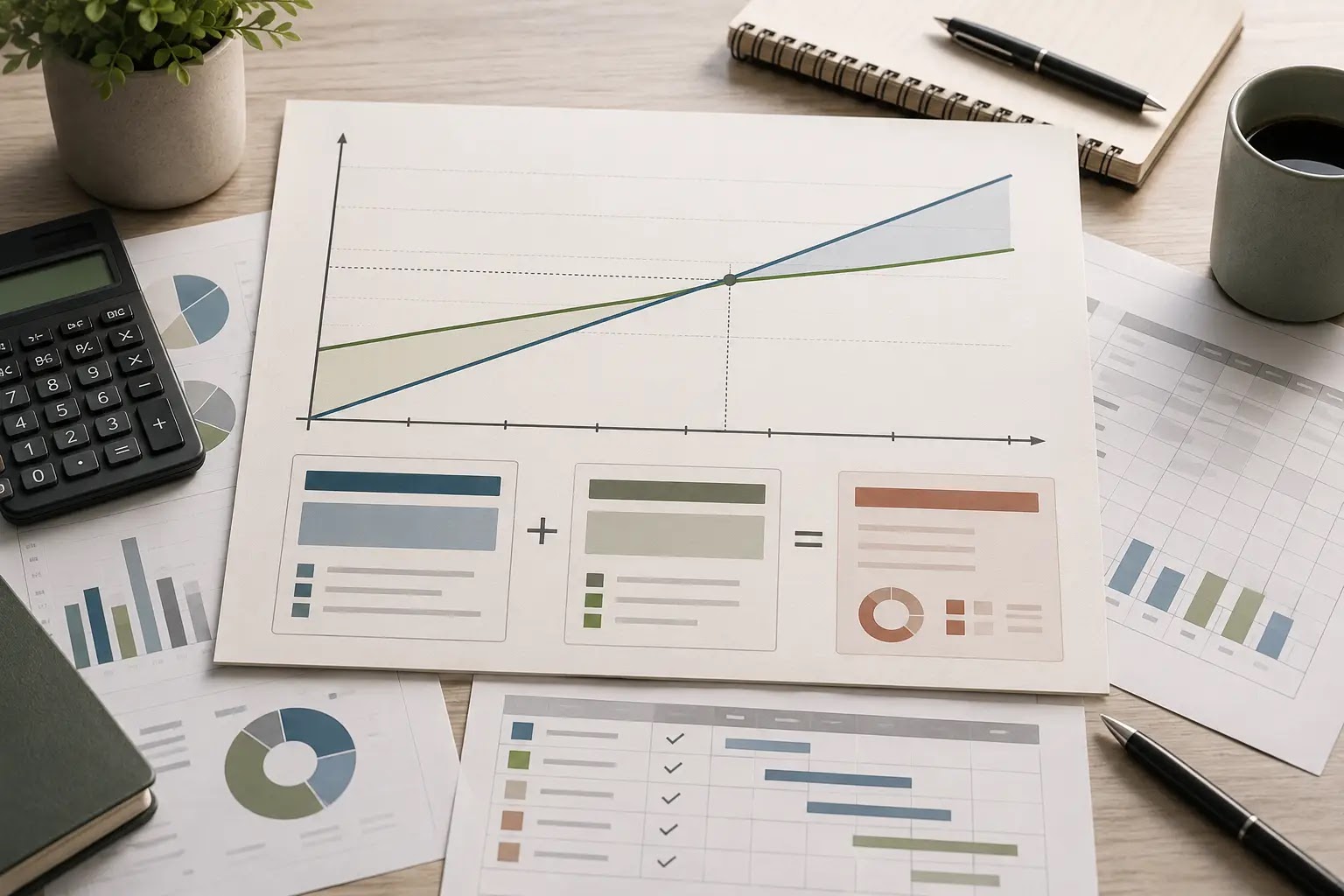
| Cash runway | Starting cash divided by monthly net burn | How long the plan can operate before additional funding is needed |
| Break-even sales | Monthly fixed costs divided by contribution margin | Minimum sales level needed to cover the route |
What should you do next before you commit to a vending machine plan?
The practical takeaway is simple: a vending machine business plan only works when it replaces generic assumptions with local, route-level inputs. The biggest mistakes are usually not the machines themselves, but weak numbers around location performance, inventory turns, commission terms, repairs, mileage, and working capital.
If your assumptions are still moving, treat the plan as a decision tool, not a finished document. Recheck the route economics, confirm vendor and landlord terms, and test whether the business can absorb slow starts, outages, and maintenance without running out of cash.
Readiness scorecard
| Checkpoint | Ready when... | Why it matters |
|---|---|---|
| Location assumptions | You have site-specific traffic, access, and placement details | Generic foot-traffic estimates can distort revenue |
| Revenue model | You can explain sales by machine, product mix, and refill frequency | Revenue should tie to operating reality, not optimism |
| Cost model | Rent, commissions, inventory, repairs, software, fuel, and labor are included | Hidden operating costs often erode margin |
| Working capital | You can cover inventory and early operating gaps | Vending often needs cash before the route stabilizes |
| Documentation | Your assumptions are clear enough for a lender, landlord, or partner to review | Readable assumptions improve decision quality and funding readiness |
Next steps before you move forward
- Verify each machine location with current local inputs instead of using broad industry averages.
- Stress-test sales, repair frequency, and refill timing against a slower-than-expected start.
- Confirm commission, access, and placement terms with the site owner or manager.
- Include inventory, route mileage, maintenance, payment processing, and software in the model.
- Check whether your cash reserve can support the business until the route becomes predictable.
- Make sure the plan, pitch deck, and checklist all tell the same story.
A business plan, financial model, pitch deck, checklist, and startup toolkit can help you organize assumptions, compare scenarios, and document the plan for partners, lenders, landlords, or advisors.


