
Vending Machine Vendor Management and Reorder Workflow
A practical U.S. planning guide for vending machine vendor management and reorder workflow, built for founders, buyers, and operators comparing assumptions before committing capital.


How should a vending machine operator think about vendor management and reorder workflow?
If you are planning a vending machine route, the core decision is not just what to stock. It is how supplier ordering, restocking timing, and exception handling will affect route mileage, spoilage, stockouts, labor, and working capital.
For founders, buyers, and operators, vendor management is a planning problem as much as an operations problem. The workflow has to fit the route, the machine mix, the product mix, and the level of staffing you can actually support.
That means the right answer depends on local supplier terms, machine placement, traffic patterns, and how often you can reasonably service each stop. Those inputs should be documented before you lock assumptions into a business plan, financial model, or pitch deck.
| What the reader is deciding | What must be verified locally |
|---|---|
| How often to reorder and restock | Route density, sales variability, supplier lead times, and delivery windows |
| Which vendors and terms can support the route | Product availability, minimum order requirements, pricing, and payment terms |
| How much labor and buffer inventory to carry | Staffing capacity, storage space, spoilage risk, and service frequency |
- Lease or location terms that affect access, service windows, and machine placement
- Equipment needs, including machine type, payment systems, and any replacement reserve
- Labor assumptions for ordering, stocking, route driving, and issue resolution
- Menu economics, including product mix, margins, and demand differences by location
- Permit or site approval inputs that may change by market and property type
- Working capital for inventory, repairs, fuel, and timing gaps between sales and vendor payment
- Funding readiness if you need to show lenders or partners how reorder discipline supports the model
With those assumptions framed, the next step is to map the practical workflow for ordering, stocking, and vendor follow-up so the operating model is realistic before launch.

How should a vending machine vendor-management and reorder workflow be structured?
What the operator is trying to document
For a vending machine business, vendor management is not just buying inventory. It is the process of matching machine demand, route timing, supplier terms, product shelf life, and labor capacity so restocking happens on a repeatable schedule. The goal is to turn day-to-day purchasing into documented assumptions that can be used in staffing plans, launch planning, and later financial modeling.
Which inputs should be verified before the reorder plan is finalized?
| Planning area | Question to answer | Input to collect | Model impact | Verification source |
|---|---|---|---|---|
| Machine-by-machine product mix | Which items actually sell in each location? | SKU list, facings, sell-through pattern, and machine capacity by slot | Affects reorder quantity, cash tied up in inventory, and waste risk | Sales reports, route notes, machine telemetry, or manual count sheets |
| Service frequency | How often does each machine need a visit? | Visit cadence by location, refill time, and exception triggers | Changes labor hours, route mileage, and service coverage needs | Route logs and on-site observation |
| Supplier lead time | How long does it take to receive replacement product? | Lead time, case-pack size, minimum order rules, and substitution policy | Sets reorder point and safety stock assumptions | Vendor quotes, purchase orders, and invoice history |
| Shrink and spoilage | What product losses should the workflow expect? | Expired items, damaged stock, theft exposure, and disposal process | Reduces usable inventory and affects gross margin assumptions | Count variance reports and disposal records |
| Route mileage | What is the real travel burden per service day? | Stop sequence, miles between locations, fuel use, and travel time | Impacts labor scheduling, vehicle cost, and daily route capacity | Map review, odometer logs, and route planning software |
| Repair response | How quickly can breakdowns be handled? | Common failure types, parts inventory, technician access, and escalation steps | Influences downtime, lost sales, and service labor reserve | Service tickets, parts invoices, and vendor service agreements |
| Location terms | What operating terms affect refill timing or product mix? | Commission terms, access hours, storage limits, and location rules | Changes replenishment window and route flexibility | Signed location agreement and manager confirmation |
| Software and reporting | How will counts, orders, and exceptions be tracked? | Inventory system, cashless reporting, alert rules, and reconciliation process | Improves accuracy of reorder decisions and variance tracking | Software demo, vendor terms, and internal reporting samples |
| Working capital buffer | How much inventory cash is needed between purchase and sale? | Average order size, payment timing, and refill cycle | Affects startup funding needs and operating cushion | Vendor terms, purchase cadence, and cash flow plan |
What is the practical workflow from research to documented assumptions?
- Build a machine-level inventory map. List each machine, its location, its SKU mix, and its usable capacity so reorder decisions are based on actual slots rather than a generic product list.
- Capture vendor terms in writing. Record minimum order quantities, case-pack sizes, lead times, delivery windows, payment timing, and substitution rules before assuming a smooth restock cycle.
- Define a reorder trigger for each product group. Set the point at which an item should be reordered using service frequency, sales pace, and the risk of stockout or spoilage.
- Translate the route into a service calendar. Group machines by geography, count travel time, and note which locations must be visited on fixed days versus flexible days.
- Assign labor and exception handling. Document who loads product, who handles repairs, who approves substitutions, and what happens when a machine is down or a vendor misses a delivery.
- Set the reporting routine. Decide how often counts, variances, low-stock alerts, and repair tickets are reviewed so reorder assumptions can be corrected quickly.
- Record the working-capital assumption. Connect purchase timing, replenishment frequency, and vendor payment terms to the amount of cash needed to keep inventory moving.
What should be treated as a planning assumption, not a fixed fact?
- Product demand by machine and by location
- Service frequency for each route segment
- Vendor delivery timing and substitution behavior
- Repair turnaround and parts availability
- Route mileage, labor time, and refuel needs
- Inventory shrink, damage, and spoilage exposure
- Software data quality and reporting completeness
The next step is to translate these workflow inputs into financial model assumptions and tradeoffs, including labor load, inventory cash, route efficiency, and downtime risk.
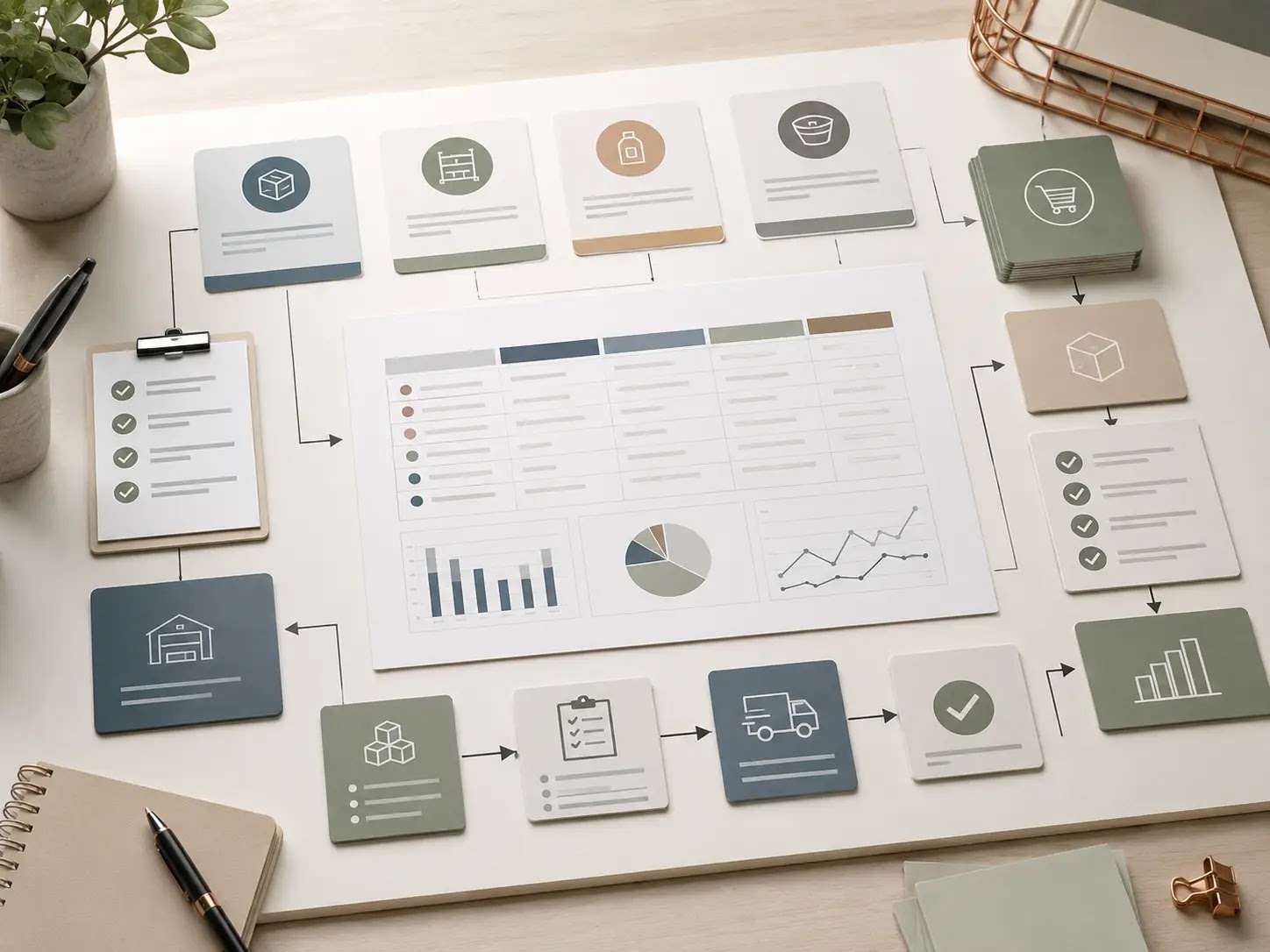
Which vendor management risks should shape your reorder workflow assumptions?
For vending machines, the reorder workflow is not just a stocking routine; it is a planning system that affects route mileage, labor hours, spoilage, machine uptime, and cash conversion. If vendor lead times are inconsistent, product sizes change, or a location’s sales mix shifts, the “right” reorder point can move quickly. That is why a practical plan should treat vendor reliability, delivery cadence, and substitute products as assumptions that need to be tested—not as fixed operating facts.
The main tradeoff is between holding more inventory for service reliability and holding less inventory to reduce carrying cost and obsolescence. More buffer stock can help prevent stockouts and emergency runs, but it also increases storage needs and can tie up working capital. Leaner inventory can improve cash efficiency, yet it raises the risk of missed sales if a supplier delays or a route is harder to cover than expected.
Operators also need to separate machine-level issues from vendor issues. A weak reorder workflow can look like a sales problem when the real issue is a late shipment, a product substitution, a damaged case, or a machine that is not reporting accurately. The planning lens should therefore connect vendor terms, route timing, and machine performance so you can see where service risk enters the model.
Scenario: stable supplier, predictable route
Reorder points can be tighter when delivery timing is reliable, sales patterns are consistent, and the route can be serviced on schedule.
Scenario: variable product availability
Assume more substitutions, wider safety stock, and closer review of whether alternate SKUs will protect sales and margins.
Scenario: longer route or remote locations
Route mileage and missed stops matter more, so the workflow should account for extra buffer inventory, higher labor time, and contingency replenishment.
| Planning risk | Why it matters in vending | Assumption affected | How to verify |
|---|---|---|---|
| Unreliable vendor lead times | Late deliveries can create stockouts and emergency restocks. | Reorder frequency, safety stock, route schedule | Review supplier quote terms, past invoices, and actual delivery history |
| Product substitutions or SKU changes | Customers may not respond the same way to replacement items. | Sales mix, margin assumptions, planogram stability | Confirm current product availability and test alternate SKUs at one or two locations |
| Route mileage higher than expected | Longer drives reduce service capacity and raise labor cost pressure. | Stops per day, labor hours, fuel and vehicle assumptions | Map routes, log actual stop times, and compare planned vs. observed mileage |
| Machine downtime or bad telemetry | Inventory decisions can be wrong if a machine is misreporting or offline. | Fill rates, reorder signals, maintenance reserve | Cross-check remote alerts with manual counts and maintenance logs |
| Vendor pricing or terms shift | Margin can move even if sales volume stays steady. | Gross margin, working capital, cash flow timing | Keep current vendor quotes and compare them with signed terms and recent invoices |
Local verification reminder
Local rules, costs, vendor terms, lease terms, and financing conditions vary by market and should be checked with current local sources. Before you lock a reorder plan, confirm the actual supplier terms, location constraints, service access, and any market-specific requirements that could change route timing or inventory needs.
The practical next step is to turn these risks into a short operating checklist: confirm the assumptions that drive reorder timing, identify which locations need extra buffer stock, and flag any vendor or lease issue that could interrupt service. The final block converts that thinking into an action list you can use before launch, acquisition, or route expansion.

What should you do next on vendor management and reorder workflow?
The practical takeaway is simple: your vending operation is easier to control when vendor terms, reorder timing, and route reporting all point to the same numbers. For a U.S. vending machine founder or buyer, that means documenting who orders, when inventory is reviewed, what triggers a refill, how substitutions are handled, and how those decisions affect mileage, labor, spoilage, and working capital.
If those inputs are not written down, the business can look active while still leaking time and cash through stockouts, over-ordering, rushed purchases, or avoidable machine downtime.
Next-step checklist
- Confirm the approved SKU list for each machine and note any acceptable substitutions.
- Write the reorder trigger for each route: minimum stock, par level, or sales-based threshold.
- Capture vendor lead times, minimum order rules, pickup policies, and credit or return terms.
- Match ordering cadence to route mileage, storage space, shelf life, and delivery windows.
- Track waste, shrink, and out-of-stock incidents in a weekly operator review.
- Review repair-related downtime so service interruptions do not distort reorder planning.
- Verify local prices, taxes, fees, lease terms, and insurance or permit requirements with current sources in your market.
Readiness scorecard
| Readiness item | What good looks like | If it is not ready yet |
|---|---|---|
| Vendor terms documented | Lead times, minimums, returns, and credits are written down. | Request current terms and keep them with the supplier file. |
| Reorder trigger defined | Each product has a clear refill point tied to route usage. | Set a simple threshold before adding more locations. |
| Weekly reporting in place | Counts, sales, waste, and stockouts are reviewed on a schedule. | Start with one route-level report before expanding. |
| Working capital planned | Cash is set aside for inventory purchases and refill timing. | Stress-test the model for slower turns or delayed vendor delivery. |
| Service interruptions tracked | Repairs and outages are visible in the same operating log. | Add downtime notes so inventory decisions reflect real machine uptime. |
If you are turning this into a business plan, financial model, pitch deck, checklist, or startup toolkit, those documents can help you organize assumptions, compare scenarios, and present the plan clearly to partners, lenders, landlords, or advisors.


