
Vending Machine Marketing Plan for the First Year
A practical U.S. planning guide for vending machine marketing plan for the first year, built for founders, buyers, and operators comparing assumptions before committing capital.


What does a first-year vending machine marketing plan need to prove?
If you are launching, buying, or expanding a vending machine business, the first-year marketing plan is really a location-sales plan: it has to show how you will win placements, keep machines stocked, and turn each stop into repeat revenue. For most operators, the key question is not broad advertising; it is whether the route, machine mix, and location terms can support enough sales to justify inventory, mileage, repairs, and working capital.
The practical decision is whether the business can build enough qualified locations and repeat visits to support the model you are using. That means tying customer acquisition to local realities such as foot traffic, access rules, commission or placement terms, refill frequency, service time, and the software or tools you will use to track the route.
| What the reader is deciding | Whether the first-year plan can support startup, acquisition, funding, or launch decisions with realistic location sales assumptions. |
|---|---|
| What must be verified locally | Placement terms, route mileage, foot traffic, commissions, inventory pricing, service access, permits, and any landlord or site requirements. |
Because vending is location-driven, the marketing plan should connect outreach efforts to the economics of each machine and each stop. A good first-year plan also shows how working capital will cover inventory, repairs, and slow ramp-up periods while you build route density and test product mix.
- Lease or placement terms for each location
- Machine purchase, lease, or refurbishment needs
- Inventory and menu economics by location type
- Labor, servicing time, and route mileage
- Permits, access rules, and site-level requirements
- Working capital for stock, repairs, and launch delays
- Funding readiness and documentation for lenders, partners, or landlords
Next, the practical framework turns those assumptions into the specific inputs you should collect before you set targets or make placement decisions.
What should the first-year vending machine marketing plan actually document?
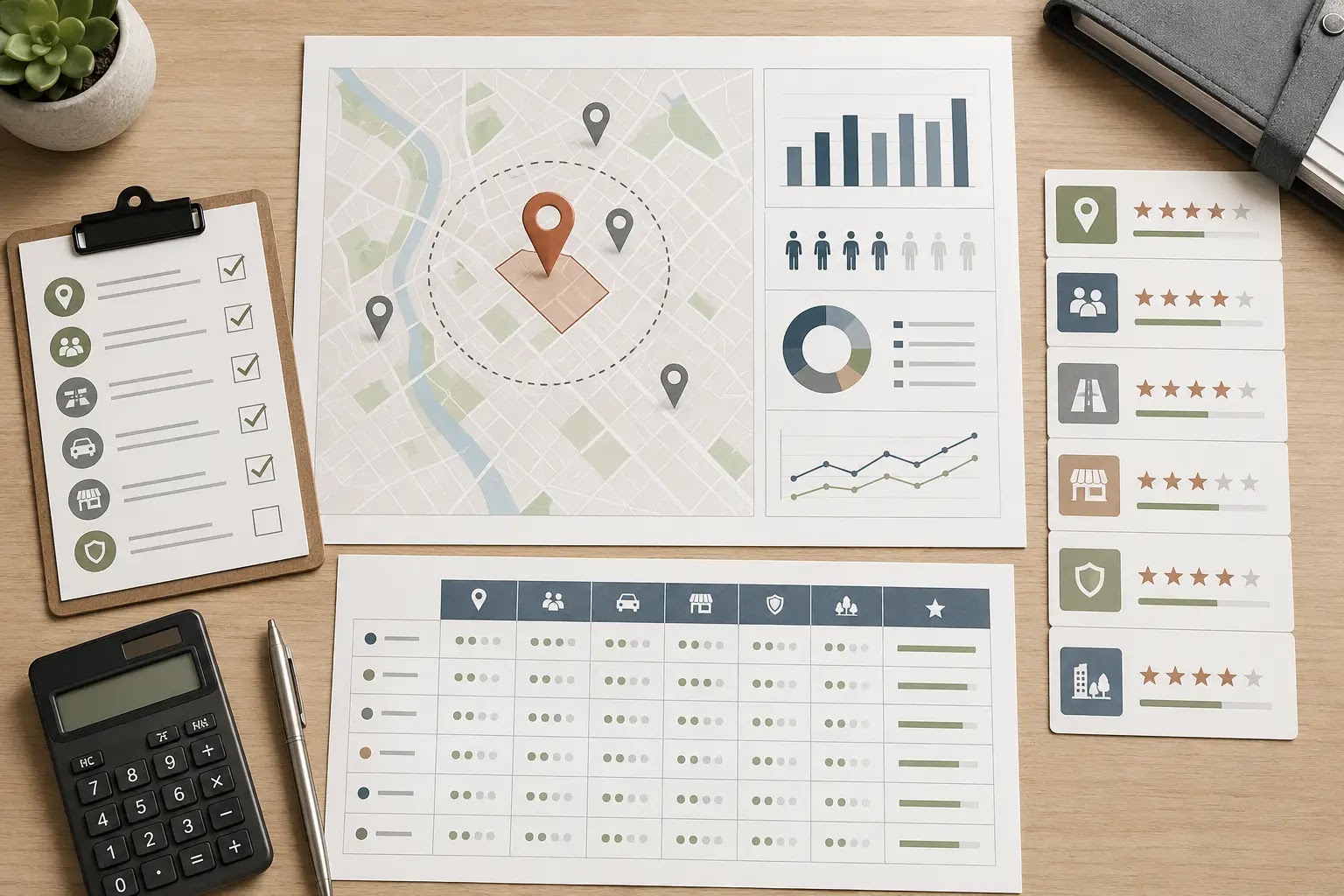
For a U.S. vending machine founder, the first-year marketing plan is really a location sales plan: identify the right sites, win placement, set location terms, and document the assumptions that drive route economics. The goal is not broad advertising. It is a repeatable process for finding machines with stable traffic, acceptable access, and workable commissions or rent.
Which assumptions belong in the location sales framework?
| Planning area | Question to answer | Input to collect | Model impact | Verification source |
|---|---|---|---|---|
| Target site type | Which locations are worth prospecting first? | Site type, hours, traffic pattern, user profile, access rules | Shapes lead list, sales effort, and expected location quality | Site walk, property manager, owner, facility contact |
| Decision-maker path | Who can approve a vending placement? | Name, role, contact method, approval process, decision timing | Drives outreach sequence and sales cycle length | Reception, property management, broker, directory, direct outreach |
| Location terms | What does the site want in return? | Commission structure, rent, contract length, exclusivity, power/access terms | Affects gross margin, cash flow, and break-even volume | Draft agreement, landlord discussion, vendor terms, competing bids |
| Route density | Can the site be serviced efficiently? | Drive time, cluster potential, delivery frequency, service window | Impacts labor, fuel, mileage, and route productivity | Mapping, route planning, dispatch notes, site schedule |
| Product mix by site | What products are likely to move at that location? | Package size, category mix, price points, dietary or usage preferences | Drives inventory purchase plan and sales per machine | Trial stocking, operator history, site feedback, sales logs |
| Machine fit and placement | Will the machine fit the site and be visible enough to sell? | Footprint, power needs, access for restock, line of sight, security | Influences install feasibility, theft risk, and sales lift | Site measurements, walk-through, photos, landlord approval |
| Launch promotion | How will the first visit be supported? | Grand-opening notice, signage, sampling, staff intro, service contact | Impacts early awareness and initial sales ramp | Site manager approval, on-site observation, feedback from users |
| Retention process | How will the account be kept after placement? | Refill cadence, complaint handling, product rotation, service response time | Affects repeat usage, location stability, and replacement risk | Service logs, outage records, customer feedback, site check-ins |
How should the founder move from research to documented assumptions?
- Build a target-site list by category, then separate locations by likely traffic pattern, access rules, and service practicality.
- Contact the actual decision-maker and record who controls placement, what they require, and how they prefer proposals to be submitted.
- Inspect each candidate site and document machine fit, power access, servicing access, and any operational constraints that could affect sales.
- Compare the site’s expected traffic with your intended product mix so the plan reflects realistic demand, not just broad category fit.
- Ask for the location’s terms in writing, including commission expectations, rent, exclusivity, contract length, and service obligations.
- Map each approved location into a route plan so mileage, stop sequencing, and refill frequency are captured before launch.
- Record the launch approach for each account: signage, introduction to staff, first-stock mix, and how the site will be reminded who to contact for issues.
- Set a review cadence for the first 90 days so low-performing locations can be adjusted, swapped, or renegotiated with evidence.
- Save every assumption in one planning file so the pitch deck, business plan, and operating checklist all reflect the same location sales logic.
What this framework should hand off to the financial model next
Once the location list, contact process, terms, and route plan are documented, the next step is to translate them into sales, inventory, mileage, labor, and working-capital assumptions. That is where the first-year model shows whether the marketing plan supports the route economics—or needs fewer sites, better terms, or a different launch sequence.

What assumptions can change a first-year vending machine marketing plan the most?
For a U.S. vending machine business, the first-year marketing plan is rarely just “advertising.” It is a location-and-sales plan that depends on route mileage, account win rate, commission structure, inventory mix, service frequency, repair exposure, and how much working capital you need to keep machines stocked and serviceable.
The planning risk is not usually whether you can list places to prospect. It is whether the locations you target can be signed, serviced, and replenished at a cost that still leaves enough margin after commissions, product shrink, machine downtime, and software or payment processing fees. That is why the marketing plan should be tested against operating assumptions, not just lead volume.
Before you move to the final action checklist, pressure-test the tradeoffs below so your forecast is based on realistic location quality, route density, and launch timing.
Scenario panel: how the first year can diverge from the plan
Higher-density route
More nearby placements can reduce drive time and make service visits more efficient, which supports stronger unit economics.
Watch the assumption: route mileage per stop and service capacity.
Commission-heavy locations
Some placements may look attractive but require higher commissions or revenue share, which can compress cash flow even if sales are steady.
Watch the assumption: net margin after location terms.
Slow ramp-up locations
A new machine may take longer to build repeat usage, so the first months can need more outreach, rotation, and follow-up than the steady-state plan assumes.
Watch the assumption: time to sales maturity and promotional effort.
Which planning risks should the first-year forecast explicitly test?
| Planning risk | Why it matters in vending | Assumption affected | How to verify |
|---|---|---|---|
| Location quality changes | Foot traffic, accessibility, and customer type can make two similar sites perform very differently. | Sales per machine and location conversion rate | Visit sites in person, review traffic patterns, and compare against similar local placements. |
| Commission or revenue-share terms | Better-looking locations may require higher payments to the site owner, reducing net sales value. | Gross margin and break-even timing | Request written terms from the site contact and compare them across target accounts. |
| Route density is too low | Long drives between machines increase labor time, fuel, and service cost per stop. | Route mileage, labor hours, and delivery cost | Map candidate locations and estimate drive time between stops before committing. |
| Product mix misses local demand | Snack, cold drink, healthy item, or specialty mix can affect sell-through and restocking frequency. | Inventory turns and replenishment cadence | Test product mix with small batches and review sales by SKU at each location. |
| Machine downtime or repairs | Unexpected service calls reduce sales days and can force extra trips or replacement parts. | Maintenance reserve and working capital | Track repair history by machine type and set aside a realistic service buffer. |
| Payment and software costs | Cashless tools, telemetry, and software can improve monitoring but add recurring expenses. | Operating expense and cash flow timing | Review vendor quotes and contract terms for recurring fees, hardware, and support limits. |
Use this risk check to revise the first-year forecast before you finalize outreach priorities, location targets, and cash needs. The goal is not to predict every outcome; it is to identify which assumptions deserve a conservative case, which ones can be tested quickly, and which ones require written confirmation before you sign or spend.
Next, move into the final action checklist and turn these verified assumptions into a launch-ready sequence for prospecting, site approval, stocking, and route setup.
What should you do next before launching your first-year vending machine marketing plan?
The practical decision path is simple: confirm the locations you can realistically win, estimate how much outreach is needed to fill the route, and test whether those locations still work after commissions, inventory, route mileage, repairs, software, and working capital are included. For a U.S. vending machine founder or buyer, the first-year plan is less about “marketing” in the abstract and more about getting enough qualified locations and repeat sales to support the route.
Decision readiness scorecard
| Readiness check | What to confirm | Why it matters |
|---|---|---|
| Location pipeline | A realistic list of target sites, contact names, and follow-up timing | Shows whether sales effort can support the route plan |
| Unit economics | Expected sales after commissions, product cost, servicing, and mileage | Prevents overestimating first-year cash flow |
| Inventory plan | How much stock is needed and how often machines will be restocked | Connects marketing wins to actual operating capacity |
| Repair and downtime buffer | Allowance for service calls, parts, and temporary machine outages | Protects the forecast from avoidable disruption |
| Working capital | Cash available for outreach, inventory, fuel, and slow-start months | Helps the business survive the ramp-up period |
Next-step checklist
- List your priority locations by type, owner, and decision maker.
- Estimate how many outreach attempts are needed to win each machine placement.
- Map the cost of commissions, inventory, route mileage, repairs, and software to each location.
- Set a realistic service cadence so marketing promises match operating capacity.
- Separate startup launch spend from ongoing monthly route costs.
- Test a conservative, base, and optimistic version of the first-year sales forecast.
- Document which assumptions still need local verification before you buy or sign a lease.
Final takeaway: A strong first-year vending machine marketing plan ties location sales to route economics, cash needs, and operating capacity—so you can decide whether the opportunity is ready to launch, needs more verification, or should be passed over.


