
Vending Machine Location Strategy: What Makes a Site Work?
A practical U.S. planning guide for vending machine location strategy: what makes a site work?, built for founders, buyers, and operators comparing assumptions before committing capital.


What makes a vending machine site work?
| What the reader is deciding | What must be verified locally |
|---|---|
| Whether a site can support a machine, a route stop, or a location lease | Foot traffic or employee count, access hours, commissions or rent, product mix, service frequency, parking/loading access, and any site-specific rules or approvals |
A vending site works when the operating math and the location terms line up. The question is not just whether people are present; it is whether the site can support enough transactions to cover inventory, route time, repairs, machine placement, and any revenue share or lease payment.
For founders and buyers, the best sites usually reduce wasted mileage, improve restocking efficiency, and fit the product mix the machine can actually sell. A strong location can still fail if access is poor, commissions are too high, or the machine needs too much service for the volume it produces.
That is why location strategy should be treated as an assumption set, not a guess. Before you commit to a site, verify the terms, operating constraints, and the practical demand drivers that will affect cash flow, staffing, and working capital.
- Lease or site agreement terms, including rent, commission, renewal, and termination conditions
- Equipment fit, machine size, payment systems, service needs, and replacement timing
- Labor and route time, including restocking frequency, travel mileage, and repair response
- Menu economics, including product mix, spoilage risk, margins, and package size fit
- Permits, site permissions, and any local operating requirements that apply
- Working capital for inventory, maintenance, deposits, and early operating gaps
- Funding readiness, if the location depends on outside capital or lender review
Next, use the practical framework to test the site inputs one by one and separate promising locations from expensive distractions.
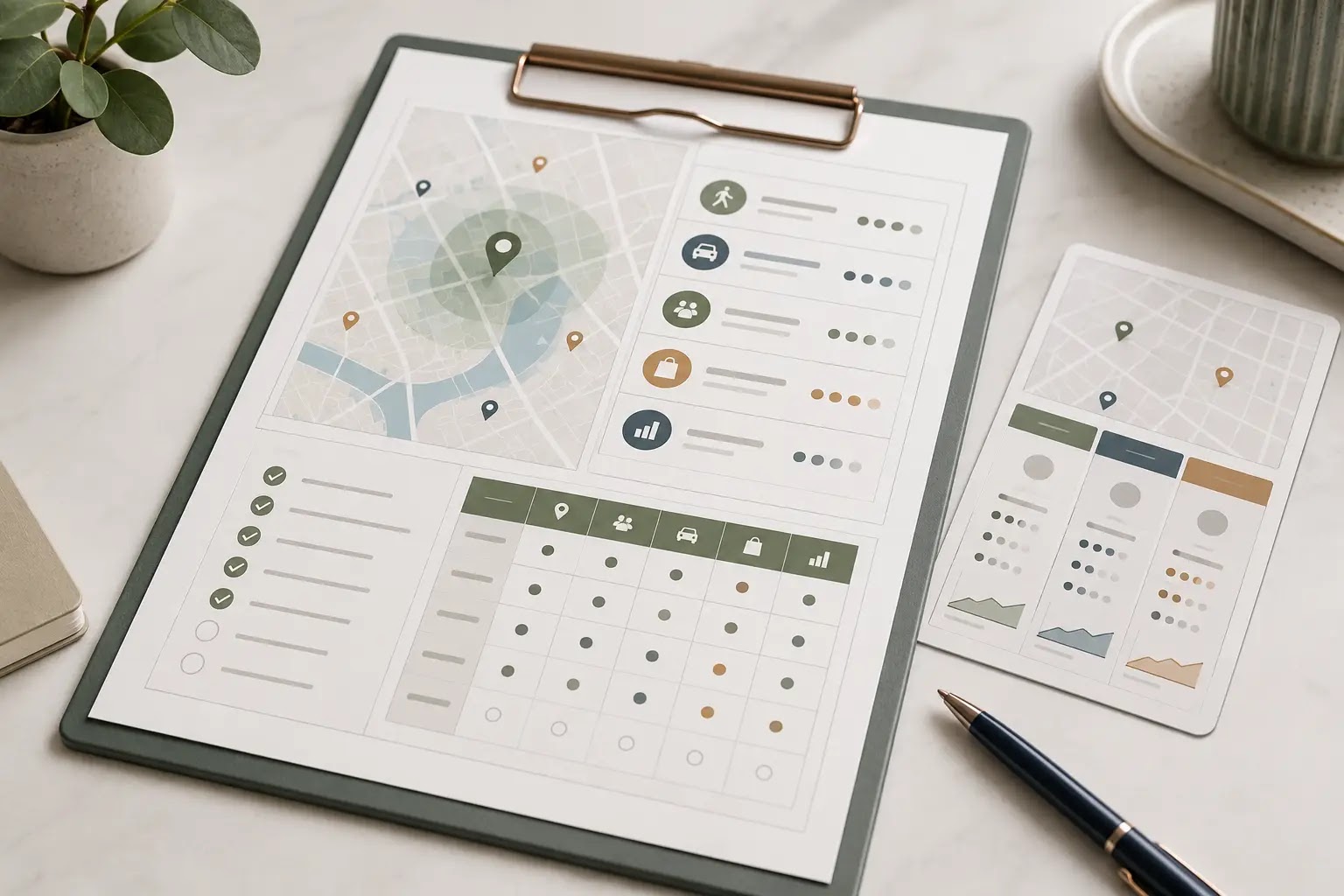
What should a vending location framework actually measure?
For route and territory planning, a “good” site is not just busy on paper. It is a site where customer demand, access, service frequency, machine fit, and owner terms line up well enough to support a repeatable route. The practical question is whether the location can be served efficiently, kept stocked, and renewed without creating avoidable drag on labor, mileage, or downtime.
Which inputs matter before you commit a machine?
| Planning area | Question to answer | Input to collect | Model impact | Verification source |
|---|---|---|---|---|
| Site type and user base | Who uses the site, and why would they buy from a machine there? | Customer profile, shift patterns, dwell time, and purchase occasions | Demand assumption and product mix | Site tour, manager interview, observation, or tenant list |
| Traffic and access | Can customers reach the machine easily and repeatedly? | Machine placement, visibility, walking paths, and hours of access | Sales potential and uptime | On-site walk-through and written placement approval |
| Route density | Does the site fit into an efficient service route? | Distance to other stops, drive time, and route clustering | Labor, fuel, and time per stop | Route map, dispatch plan, and mileage tracking |
| Restock cadence | How often will the machine need service? | Expected inventory turns, product size, and refill frequency | Working capital, labor scheduling, and spoilage risk | Test sales logs and route history where available |
| Owner or landlord terms | What does the site owner require in exchange for placement? | Commission structure, exclusivity, term length, and termination rights | Net margin and site retention risk | Draft agreement, email trail, or signed location terms |
| Utilities and site readiness | Does the space support the machine you plan to install? | Power access, floor space, ventilation, internet or payment connectivity, and security | Equipment choice and install cost | Site survey and equipment specs |
| Product fit | Will the machine’s product set match what the site actually buys? | Snack, beverage, cold food, specialty, or cashless mix | Average transaction size and waste risk | Comparable site data, pilot run, or vendor feedback |
| Competing options | What else can the customer use instead of your machine? | Nearby vending, micro-market, cafeteria, or convenience access | Conversion rate and pricing pressure | Competitor scan and site manager discussion |
| Service risk | What could interrupt sales after placement? | Access restrictions, vandalism exposure, elevator or loading limits, and repair response time | Downtime, maintenance expense, and route disruption | Building rules, security policy, and service history |
How do you turn site research into documented assumptions?
- Define the territory first. Set the operating area, route boundaries, and the types of sites you want to pursue before you evaluate any single location.
- Screen for route fit. Group candidate sites by drive distance, service frequency, and how easily they can be restocked in one pass.
- Collect site-specific inputs. Record the customer base, access hours, placement rules, machine space, and any owner or landlord terms that affect service.
- Separate demand from convenience. Note whether the site looks attractive because it is busy, or because it is simply easy to visit. Both matter, but they affect the route differently.
- Document the operating assumption. Write down what must be true for the site to work: expected sales pattern, refill cadence, commission terms, and acceptable downtime.
- Check the route burden. Compare the site against your other stops to see whether it adds useful density or creates extra mileage and labor.
- Confirm the install path. Verify how the machine will be delivered, placed, powered, and serviced without creating delays or repeated access problems.
- Convert findings into a site sheet. Capture the assumptions in a simple record that can be reviewed before launch, acquisition, or funding conversations.
What should a founder have in hand before moving to modeling?
By the time you finish this stage, you should have a route map, a site-by-site assumption sheet, and a clear list of what still needs verification with the location owner, property manager, or vendor. That gives you a practical base for the next step: testing how those site assumptions affect revenue, labor, replenishment, commissions, and working capital.
Next up: Block 3 connects these location assumptions to the financial model, tradeoffs, and risk checks.

What location tradeoffs can make or break a vending route?
For a vending machine buyer or founder, a “good” site is not just high foot traffic. It is a location where the expected sales pattern, route travel time, service frequency, commission structure, and machine uptime all work together. A site can look attractive on paper and still underperform if the customer mix is uneven, access is limited, restocking is inconvenient, or the lease terms leave too little margin after commissions and service costs.
The practical question is whether the site supports your operating model. A dense route with short drive times may be easier to scale, while a scattered set of locations can raise mileage, labor, fuel, and repair response time. A premium site may justify stronger sales assumptions, but only if you can verify placement rights, delivery access, payment setup, and the host’s expectations for service, hours, and reporting.
Which site scenario is most likely to pressure your assumptions?
High-traffic site, higher commission
Sales may improve, but the margin depends on whether the added volume is enough to cover commission, refill labor, and machine wear.
Low-rent site, weak traffic
Lower occupancy cost can look appealing, but slower turns may tie up inventory and extend the payback on the machine.
Clustered route vs. scattered route
More clustered stops usually reduce travel and service friction, while scattered stops can erode operating efficiency even when each site seems acceptable on its own.
That is why the decision should be built around assumptions, not optimism. The site itself affects demand, but it also affects how often you visit, how much inventory you carry, how quickly you can resolve jams or card reader issues, and how much cash or digital payment reconciliation is required. If the location has special access rules, limited hours, or unpredictable building operations, those factors can change the route economics as much as the sales estimate.
| Planning risk | Why it matters | Assumption affected | How to verify |
|---|---|---|---|
| Foot traffic does not match the customer profile | Busy sites can still underperform if the people passing by are not likely buyers. | Sales volume, product mix, replenishment frequency | Observe the site at different times, ask about tenant mix, and confirm who uses the space. |
| Commission or revenue share is higher than expected | Even strong sales can become weak after the host’s take. | Gross margin and net site contribution | Request the host’s proposed terms in writing and compare them against your model inputs. |
| Route is too spread out | Long drives increase labor, fuel, and response time for restocking or repairs. | Service time, mileage, labor cost | Map the stops, estimate travel between sites, and test whether the route is practical in one work block. |
| Machine downtime is harder to absorb than planned | Repair delays can mean missed sales and frustrated hosts or users. | Availability, maintenance reserve, spare parts planning | Review service access, vendor response expectations, and whether replacement parts are easy to source. |
| Access and placement are less convenient than expected | If restocking requires appointments, special keys, or limited hours, operating effort rises. | Labor scheduling, visit cadence, operational friction | Walk the site, confirm placement rights, and ask who controls access after hours or on weekends. |
| Payment mix changes the cash flow pattern | Cash, card, and other payment methods affect reconciliation, fees, and collection routine. | Cash handling, fee burden, reporting workflow | Confirm what payment systems are supported and what reporting data you can access. |
Verification reminder
Local rules, costs, vendor terms, lease terms, and financing conditions vary by market and by property. Before you rely on any site assumption, verify it with current local sources, the host or landlord, and the vendors involved in your equipment, software, and service setup.
Use these risks to pressure-test the location before you commit. The goal is not to find a perfect site; it is to identify which assumptions are stable enough to support your route, your working capital plan, and your operating schedule. In the final checklist, you will turn those verified assumptions into a go-or-no-go decision for the site.

What should you do next before you commit to a vending site?
The practical answer is simple: a vending location works when the customer traffic, machine fit, access terms, and route economics all line up. Before you sign, buy, or build out, confirm that the site can support the machine mix, refill cadence, repair access, inventory handling, and commission structure you can actually operate.
If any of those pieces are uncertain, treat the site as a draft assumption—not a finished plan.
Decision checklist
- Verify the site’s traffic pattern matches the products you plan to stock.
- Confirm who controls placement, access hours, and service permissions.
- Pressure-test route mileage, refill frequency, and labor time.
- Check whether commissions, rent, or revenue share fit your margin model.
- Confirm power, spacing, security, and machine access requirements.
- Estimate inventory, cash float, and repair reserves before launch.
- Compare the site against other locations, not just against no location.
- Verify local terms, vendor requirements, and market pricing with current sources.
Readiness scorecard
| Readiness item | What to confirm | Why it matters |
|---|---|---|
| Site demand | Who is on-site, when they are there, and what they are likely to buy | Drives product mix and sales potential |
| Operating access | Delivery, stocking, maintenance, and emergency access | Affects service reliability and labor burden |
| Economics | Commission, rent, route costs, inventory costs, and repair exposure | Determines whether the site can support profit |
| Route fit | Drive time, stop clustering, and refill cadence | Shapes how many machines one operator can manage |
| Launch readiness | Equipment, stock, payment setup, service process, and working capital | Prevents avoidable delays after placement |
Next steps to make the decision concrete
- Collect the site details you still cannot verify from the owner, manager, or landlord.
- Build one conservative and one favorable site assumption set.
- Compare the site against your route capacity and service schedule.
- Stress-test commissions, spoilage, downtime, and stock turns in your financial model.
- Document the location terms in your checklist before you commit capital.
A business plan, financial model, pitch deck, checklist, and startup toolkit can help you organize these assumptions, compare site scenarios, and document the plan for partners, lenders, landlords, or advisors.
Final takeaway: a vending location is worth pursuing when the site, route, and operating terms fit together on paper and still look workable after local verification.


