
Vending Machine Financial Projections Template Guide
A practical U.S. planning guide for vending machine financial projections template guide, built for founders, buyers, and operators comparing assumptions before committing capital.

What should a vending machine financial projections template answer?
If you are buying or launching a U.S. vending machine business, the template should show whether the route can support the machines, inventory, service time, and working capital the business will actually need. The goal is not a polished spreadsheet first; it is a clear set of assumptions that lets you compare locations, routes, and funding options with less guesswork.
For vending, the biggest model swings usually come from machine count and type, location traffic, product mix, commissions or placement fees, route mileage, repair and restocking labor, payment processing, and how much cash you need before the route stabilizes. Exact values vary by market and operator, so the template should force local verification instead of relying on generic averages.
| What the reader is deciding | What must be verified locally |
|---|---|
| Whether a startup, acquisition, or route expansion is viable | Machine count, route quality, location contracts, and service access |
| Whether the equipment mix can support projected sales | Machine condition, product mix, pricing, refill frequency, and repair history |
| Whether the business can support funding or self-funding | Lender or investor requirements, owner equity needs, and working capital needs |
- Lease, storage, or buildout terms tied to holding machines and inventory
- Equipment purchase price, age, condition, and expected repair exposure
- Labor for restocking, route driving, and service calls
- Menu economics, including price points, product mix, spoilage, and margin by item
- Permits, placement requirements, and any location-specific operating rules
- Working capital for inventory, fuel, payments, maintenance, and early operating gaps
- Funding readiness, including documentation for lenders, buyers, or partners
With those inputs defined, the next step is the practical planning framework that turns them into a usable model for startup, acquisition, and funding decisions.
How should a vending machine financial projection template be built?
For a U.S. vending machine startup, buyer, or route acquisition, the template should turn operational decisions into documented assumptions before you try to forecast profit. The right framework links each number to something you can verify: machine count, location terms, product mix, service route mileage, spoilage, repairs, commissions, software, and working capital needs.
In a business plan and funding package, the goal is not perfect precision on day one. It is a defensible assumption set that lenders, landlords, partners, and buyers can follow and challenge. That starts with a clear table of inputs and a repeatable workflow for collecting them.
Which assumptions belong in the template?
| Planning area | Question to answer | Input to collect | Model impact | Verification source |
|---|---|---|---|---|
| Machine count and mix | How many machines will be operating, and what types are they? | Number of machines, new vs. used, snack, beverage, combo, specialty | Drives startup capital, maintenance load, and revenue capacity | Supplier quotes, acquisition records, asset list |
| Location terms | What does each placement agreement require? | Commission structure, rent, revenue share, placement fees, term length | Affects gross margin, net sales, and break-even timing | Draft location agreement, property manager, site owner terms |
| Sales volume | What demand level is reasonable for each machine? | Expected transactions, average ticket, seasonal patterns, foot traffic notes | Sets revenue forecast and scenario ranges | Existing route data, site observation, comparable operator history |
| Product mix and inventory | Which SKUs will be stocked, and how often will inventory turn? | Item mix, wholesale cost, spoilage risk, restock frequency | Changes cost of goods sold and cash tied up in inventory | Vendor price sheets, purchase invoices, past restock logs |
| Route operations | How much service time and mileage will the route require? | Service frequency, miles per route, labor hours, vehicle fuel and wear assumptions | Impacts labor, transportation, and operating expense forecasts | Route map, driving logs, dispatch plan, vehicle records |
| Repairs and downtime | What maintenance burden should the model carry? | Repair frequency, parts budget, emergency service allowance, downtime assumptions | Affects operating expenses and lost sales assumptions | Service invoices, technician estimates, machine age and condition report |
| Cashless and software costs | What technology is needed to monitor and collect from the route? | Telemetry fees, payment processing, route software, connectivity charges | Changes recurring overhead and collection efficiency assumptions | Vendor contracts, pricing sheets, processor terms |
| Working capital | How much cash is needed to operate before the route stabilizes? | Inventory buffer, spare parts, cash reserve, fuel, initial payroll, setup float | Determines funding need and early-month cash pressure | Startup budget, opening balance plan, lender or investor requirements |
What is the best workflow for documenting assumptions?
- Map the route or acquisition target. List every machine, its location, machine type, and whether the business is starting from scratch or buying an existing route.
- Separate one-time startup items from recurring operating costs. Put equipment purchases, refurbishment, permits, deposits, and initial inventory in startup uses; put commissions, inventory replenishment, repairs, software, fuel, and labor in ongoing expenses.
- Collect source documents for each assumption. Use supplier quotes, seller records, site terms, location communications, maintenance logs, and vendor pricing so each input can be traced.
- Label each number as confirmed, estimated, or placeholder. This helps when the business plan is still in progress and keeps lenders or partners from mistaking early assumptions for fixed terms.
- Test the highest-risk variables first. For vending, that usually means sales volume, location commission, product cost, route mileage, and repair frequency.
- Document the rationale in plain language. Note why a site should perform a certain way, why a machine needs a specific service frequency, or why inventory turns should be faster or slower.
- Roll the assumptions into a funding-ready summary. Show how startup capital, working capital, and operating margins connect to the requested investment or loan amount.
For a business plan or pitch deck, this framework works best when every assumption is traceable and easy to adjust. If a location changes commission terms, if a service route is longer than expected, or if cashless processing costs differ from the quote, the model should be updated from the source document rather than guessed.
Next, translate these documented inputs into revenue, expense, and cash-flow scenarios so the model can show how the business behaves under different sales and cost conditions.

How do the projection assumptions change the funding need?
For a vending machine model, the biggest swings usually come from machine count, route density, restock frequency, product mix, commissions, repairs, and working capital. A route purchase, a new launch, and a small test rollout can look similar until you replace placeholders with local quotes and actual location terms.
Use the projection to test whether the business can support startup cash, monthly burn, and break-even sales under conservative assumptions—not just the best case.
What can distort the model?
- Sales per machine are lower than expected at slower locations or during seasonal dips.
- Product mix shifts the margin because snacks, beverages, and specialty items do not all perform the same.
- Location commissions, delivery fees, or landlord terms reduce net revenue.
- Repairs, downtime, and spoilage increase the cash needed to keep machines stocked and operating.
- Route miles, fuel, and labor time rise if machines are spread too far apart.
- Financing payments or deposit requirements create a larger early cash gap than the sales forecast shows.
Calculator-style planning worksheet
| Planning input | Placeholder to replace | Model effect | Verification source |
|---|---|---|---|
| Startup cash need | Machine price or acquisition price + freight/install + opening inventory + tools + software/setup + working capital reserve | Sets the total funding requirement before launch | Seller quotes, vendor quotes, and your opening budget |
| Monthly fixed costs | Route labor, storage or rent, software, vehicle overhead, insurance, admin, and other fixed items | Drives the monthly break-even sales target | Lease terms, payroll plan, vendor contracts, and insurance quotes |
| Gross margin rate | Sales minus product cost, commissions, spoilage, shrink, and payment fees | Changes how much revenue is left to cover fixed costs | Supplier terms, location agreements, and historical purchase mix |
| Break-even sales | Monthly fixed costs ÷ gross margin rate | Shows the sales level needed to avoid operating loss | Projection output based on verified inputs |
| Cash runway | Starting cash ÷ projected monthly burn | Shows how long the business can operate before needing more cash | Opening bank balance, financing terms, and monthly forecast |
| Labor coverage | Route time, service frequency, and restock hours available | Determines whether the route can actually be serviced on schedule | Driving map, service plan, and staffing assumptions |
| Repair reserve | Planned allowance for maintenance, parts, and downtime | Protects the cash forecast from overly optimistic uptime assumptions | Maintenance quotes, service history, and technician terms |
How do the scenarios trade off?
| Scenario | Assumption shift | Likely planning impact | What to verify |
|---|---|---|---|
| Conservative | Lower sales, higher commission, more repairs, slower restock turns | Higher funding need and shorter cash runway | Location traffic, actual commissions, service frequency, and repair history |
| Base case | Quoted pricing, normal downtime, planned route coverage, expected mix | Working planning case for the funding package | Written vendor quotes and signed or draft location terms |
| Upside | Better route density, stronger product mix, fewer service disruptions | Lower break-even pressure and better cash efficiency | Comparable route data and verified demand signals |
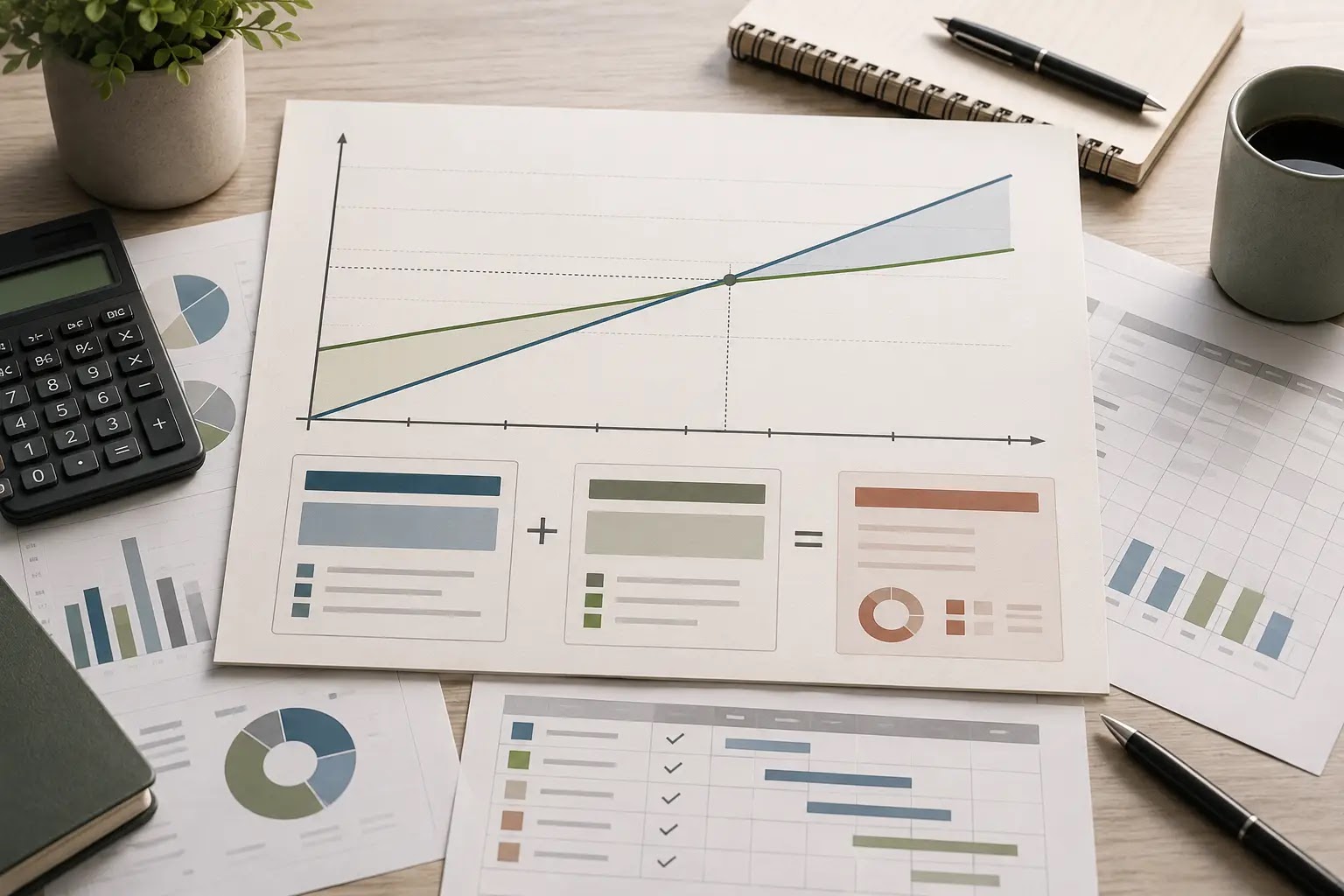
Simple planning formulas: startup cash need = equipment and launch costs + working capital reserve − confirmed funding sources; monthly break-even sales = fixed monthly costs ÷ gross margin rate; cash runway = starting cash ÷ average monthly burn.
What should you do next with the vending machine financial projections?
Practical recap: treat the projections as a decision tool, not a guess sheet. The model should reflect how many machines you can place, what each route costs to service, how much inventory you must carry, and how repairs, commissions, software, and working capital affect cash flow. If those inputs are still uncertain, the next step is to verify them before you rely on the numbers for a purchase, startup, or funding decision.
Readiness scorecard
| Checkpoint | Ready when... |
|---|---|
| Location assumptions | You have a realistic count of target placements and the likely commission structure for each one. |
| Route economics | You can estimate mileage, service time, restocking frequency, and labor or owner-operator time. |
| Machine economics | You have assumed purchase or lease terms, maintenance risk, and expected replacement timing. |
| Inventory plan | You know the product mix, replenishment needs, and how much cash will stay tied up in stock. |
| Cash coverage | You have enough working capital to absorb slow ramp-up, repairs, and delayed collections. |
| Funding package | Your assumptions are documented clearly enough for a lender, landlord, partner, or advisor to review. |
Next-step checklist
- Confirm the number of machines, locations, and route miles you can actually support.
- Validate product pricing, commissions, and refill frequency with current local sources.
- Separate startup costs from ongoing operating costs in your projection.
- Stress-test repairs, theft, spoilage, and lower-than-expected sales.
- Check whether you need more working capital than the purchase price alone suggests.
- Turn the assumptions into a lender- and partner-ready summary.
Useful planning bridge: a business plan, financial model, pitch deck, checklist, and startup toolkit can help organize your assumptions, compare scenarios, and document the plan for partners, lenders, landlords, or advisors. For a vending machine business, that documentation matters most when the cash flow depends on route efficiency, inventory control, and reliable placement terms.
Final takeaway: if the projections still hold after you verify locations, route costs, commissions, equipment needs, and cash reserves, you have a usable basis for a U.S. vending machine startup, acquisition, or launch decision. If they do not, revise the inputs before you commit.


