
Vending Machine Monthly Expense Forecast: Fixed and Variable Costs
A practical U.S. planning guide for vending machine monthly expense forecast: fixed and variable costs, built for founders, buyers, and operators comparing assumptions before committing capital.


What does a vending machine monthly expense forecast need to include?
If you are buying, launching, or funding a U.S. vending machine business, the monthly expense forecast is where profitability becomes real. The key question is not just “what does a machine cost?” but “what does it cost each month to keep the route stocked, serviced, and profitable once location terms, product mix, and labor are included?”
A practical forecast separates fixed costs, such as software, insurance, storage, and financing obligations, from variable costs like inventory, commissions or location share, route mileage, repairs, and card-processing fees. That split helps you estimate break-even economics, owner earnings, and how sensitive the business is to location quality and machine count.
For a buyer or founder, the forecast is only as useful as the inputs behind it. Lease terms, route density, machine condition, product margins, supplier pricing, and local operating requirements can change the monthly picture materially, so the model should be built from actual route data or current quotes whenever possible.
| What the reader is deciding | What must be verified locally |
|---|---|
| Whether the route can cover monthly expenses and still produce acceptable owner earnings | Location commissions, rent, supplier pricing, service costs, route mileage, and any local permit or insurance requirements |
Which assumption categories move the forecast most?
- Lease or location terms: rent, revenue share, commission structure, and access conditions.
- Equipment: purchase price, financing terms, maintenance, and replacement timing.
- Labor: route servicing time, restocking frequency, and owner-operator involvement.
- Menu economics: product mix, gross margin, spoilage, shrinkage, and sell-through.
- Permits and operating requirements: local rules, registrations, and any location-specific obligations.
- Working capital: cash needed for inventory, repairs, float, and ramp-up months.
- Funding readiness: whether the numbers are documented well enough for lenders, partners, or a pitch deck.
With those assumptions in view, the next step is to turn them into a practical planning framework that separates fixed and variable costs without masking the true break-even point.

How should a vending machine owner build the monthly expense forecast?
For route and unit economics, the useful forecast is not just “fixed vs. variable.” It is a documented list of machine-level, site-level, and route-level costs that can be tied back to sales volume, service frequency, and location terms. That makes the forecast usable for startup planning, acquisition review, and lender or partner conversations.
Which cost inputs need to be separated before the model works?
Start by dividing expenses into items that stay relatively stable each month and items that move with route activity, transaction volume, or product sold. For vending, the most important differences usually come from inventory mix, site commissions, travel, maintenance, and payment processing.
| Planning area | Question to answer | Input to collect | Model impact | Verification source |
|---|---|---|---|---|
| Machine count and placement | How many active machines are on route, and where are they located? | Number of machines, site type, access hours, placement terms | Drives fixed overhead per machine and route density assumptions | Placement agreement, route list, site visit notes |
| Inventory and product mix | What product categories sell, and what is restocked each visit? | SKU mix, unit cost, package size, expected shrink or spoilage | Feeds cost of goods sold and gross margin assumptions | Supplier invoices, purchase receipts, sales history |
| Route mileage and fuel | How far does each service day travel, and how often are stops made? | Miles per route, service frequency, vehicle fuel cost, tolls or parking | Creates route variable cost and service labor efficiency | Map route plan, fuel receipts, odometer logs |
| Site commissions or rent | What does each location charge for placement? | Commission structure, minimum rent, rev share terms, payment timing | Affects monthly overhead and per-machine contribution margin | Signed site agreement, landlord or operator invoice |
| Repairs and maintenance | What service events are likely in a normal month? | Parts reserve, technician time, emergency call frequency, warranty status | Shapes repair reserve and downtime risk | Service logs, repair invoices, vendor terms |
| Payment processing and telemetry | What does it cost to accept cards and monitor machines remotely? | Processor fee structure, reader fees, telemetry subscription, cashless mix | Influences variable cost per sale and software overhead | Processor agreement, device invoices, software contract |
| Labor and owner time | Who services, counts cash, and replenishes inventory? | Owner hours, employee hours, outsourced service rate | Determines operating expense and owner earnings realism | Payroll records, contractor quotes, route schedule |
| Storage and handling | Do you need warehouse space, shelves, or cold storage? | Storage rent, utilities, handling supplies, loading equipment | Adds fixed overhead and working capital needs | Lease terms, storage invoice, supplier requirements |
| Local fees and insurance | What recurring business costs apply in the operating market? | Registration, permit, insurance, renewal, and filing costs | Raises monthly fixed cost and startup cash requirements | Current local agency guidance, insurer quote, advisor review |
| Cash reserve | How much buffer is needed for slow sales, repairs, or delayed collections? | Target reserve months, collection cycle, expected vendor payment terms | Does not change monthly expense directly, but affects funding need | Cash flow plan, vendor terms, lender or buyer diligence |
What is the practical workflow from research to documented assumptions?
- List each machine, location, and service stop so the forecast is built at route level, not as one blended number.
- Collect current invoices, receipts, and vendor quotes for snacks, drinks, parts, telemetry, payment processing, fuel, and any storage or labor input.
- Separate each item into fixed monthly overhead, per-machine costs, per-visit costs, or per-sale costs.
- Document the service pattern for each location: visit frequency, restock volume, cash collection timing, and expected downtime.
- Estimate sales mix by machine type so high-margin and low-margin products are not treated the same.
- Record site commissions, rent, or revenue-share terms exactly as written and note whether they are fixed, tiered, or percentage-based.
- Flag every assumption that comes from a placeholder, estimate, or old contract so it can be replaced with current local data.
- Build a short assumption log with source, date, and owner so the forecast can be audited during acquisition review or funding diligence.
What should be handed off into the next section?
Once these inputs are organized, the next step is to translate them into base, downside, and upside cases, then test how monthly margin changes when route density, commissions, product mix, or repair frequency move. That is where the financial model shows whether the business clears break-even with enough cushion for real-world variability.
How do break-even and cash-runway assumptions change the monthly expense forecast?
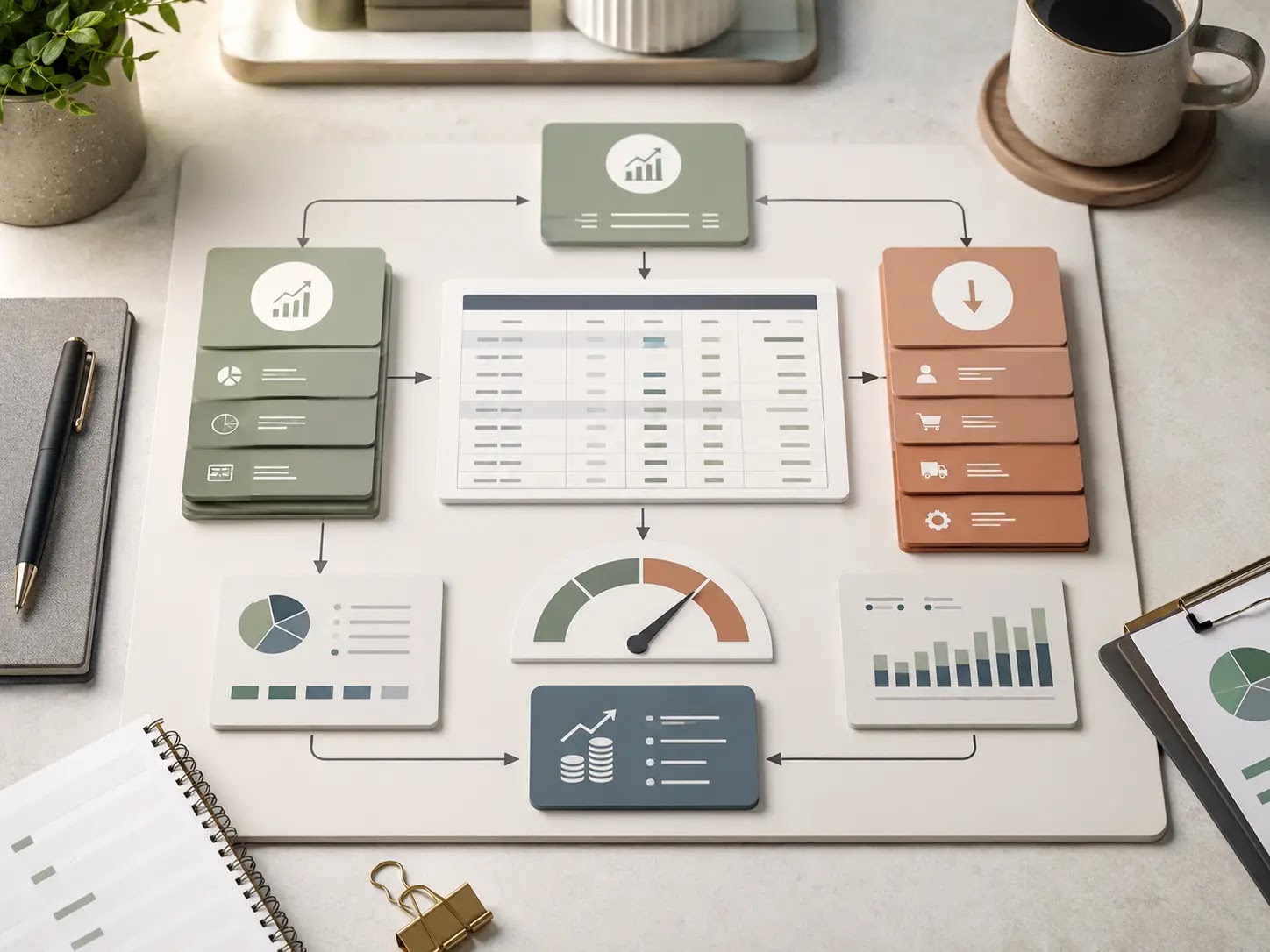
For a vending machine business, the monthly expense forecast is only useful if it shows how sales mix, commissions, route density, repairs, and labor coverage change owner earnings. Fixed costs set the baseline, but variable costs usually decide whether a route is comfortably profitable or only breaks even.
That means the key planning question is not just “What are my monthly costs?” It is “What sales level, machine count, and location terms are required to cover those costs with room for repairs, downtime, and working capital?”
Illustrative monthly planning calculator
Replace every placeholder with current quotes, route data, and verified location terms. This is a planning worksheet, not a live calculator.
| Line item | Planning input to replace | Forecast effect |
|---|---|---|
| Monthly fixed costs | Rent, software, insurance, admin, storage, base labor, any recurring service contracts | Sets the baseline that sales must cover before owner earnings begin |
| Product cost of goods | Current wholesale prices for snacks, drinks, or specialty inventory | Drives gross margin and changes with product mix |
| Location commissions / fees | Lease or placement terms, revenue share, utility or access fees if applicable | Raises the breakeven point for each machine or route stop |
| Route mileage and fuel | Route map, service frequency, fuel price, vehicle wear estimate | Moves cost with distance, density, and stop count |
| Repairs and maintenance reserve | Observed service history, technician quote, spare parts plan | Protects cash flow from downtime and one-off repairs |
| Payment, telemetry, and software fees | Vendor pricing and contract terms | Adds recurring overhead and may vary by machine count |
| Labor coverage | Owner time, helper hours, payroll, or contractor support | Can be fixed, variable, or semi-variable depending on route design |
| Estimated monthly sales | Sales per machine, machine count, and product mix assumptions | Feeds the revenue side of the break-even model |
| Estimated monthly profit before debt and taxes | Sales minus product cost, commissions, route costs, repairs, and fixed overhead | Shows whether the route can support owner pay and reinvestment |
| Break-even sales | Fixed monthly costs ÷ contribution margin rate | Shows the sales level needed to cover the monthly expense base |
| Cash runway | Available cash ÷ expected monthly burn | Helps judge whether startup or acquisition funds are sufficient |
Default values are illustrative placeholders only. Replace them with current vendor quotes, route records, and local market assumptions before using the forecast in a loan package, acquisition review, or launch budget.
What usually moves the forecast the most?
- Machine count and how evenly sales are spread across locations
- Product mix, because drinks, snacks, and premium items can carry different margins
- Commission structure or revenue share with the location owner
- Route density, which affects mileage, labor time, and fuel use
- Repair frequency and downtime risk for older or used machines
- Whether labor is fully owner-operated or requires hired support
Sensitivity snapshot
| Scenario | Assumption shift | Likely planning impact |
|---|---|---|
| Conservative | Lower sales per machine, higher commissions, more service stops | Higher break-even sales and tighter cash runway |
| Base case | Expected traffic, standard product mix, normal repair reserve | Useful for lender or partner planning materials |
| Stress case | Slower turnover, extra repairs, or temporary location downtime | Shows how much working capital is needed before launch |

What should you do next with the vending machine expense forecast?
Practical recap: your monthly forecast should separate fixed costs, variable costs, and working capital needs so you can see whether the route still works after inventory, mileage, commissions, repairs, software, and other operating expenses are included. For a U.S. vending machine startup or acquisition, the goal is not a perfect forecast on day one; it is a model you can defend with local quotes, route assumptions, and vendor terms.
If the monthly numbers only work under optimistic sales assumptions, the next step is to tighten the inputs before you commit to a machine purchase, location agreement, lease, or funding request.
Readiness scorecard: is your expense forecast usable yet?
| Decision item | What to confirm | Ready when... |
|---|---|---|
| Machine count and route size | How many machines you will operate and where they sit | The route plan is specific enough to estimate mileage, service time, and replenishment frequency |
| Inventory cost | Product mix, wholesale pricing, spoilage risk, and fill levels | You have current vendor quotes or recent purchase records |
| Location economics | Commission, rent, or host-share terms | Each location has a written or documented economic assumption |
| Repair and maintenance | Expected service calls, parts, and technician support | You have a buffer for routine repairs and unexpected downtime |
| Software and admin | Telemetry, accounting, payment, and route management tools | Recurring tools and back-office tasks are included in monthly overhead |
| Working capital | Cash needed for inventory, fuel, and early operating gaps | You can cover expenses before each machine reaches steady sales |
Next-step checklist
- Gather current supplier pricing for the products you expect to stock most often.
- Estimate route mileage, refill frequency, and service time by machine or location cluster.
- List every recurring monthly cost, including software, payment fees, storage, insurance, and admin support where applicable.
- Confirm location terms that affect margin, such as commissions, rent, or revenue-share arrangements.
- Build a repair and replacement reserve so your forecast is not dependent on perfect machine uptime.
- Test the model under slower sales and higher-cost scenarios before buying equipment or expanding the route.
- Verify local prices, vendor terms, lease terms, tax treatment, and any permit or insurance requirements with current sources in your market.


