
Vending Machine KPI Review Cadence for Owners
A practical U.S. planning guide for vending machine kpi review cadence for owners, built for founders, buyers, and operators comparing assumptions before committing capital.


How often should vending machine owners review KPIs?
For most vending operators, the right KPI review cadence is not one fixed schedule; it depends on route size, machine count, restocking frequency, and how often the owner or staff can act on what the numbers show. The practical goal is to catch stockouts, slow machines, repair issues, and cash-flow pressure early enough to change the route plan before they compound.
If you are buying, launching, or funding a vending business, KPI cadence also affects how believable your operating plan is. Lenders, partners, and advisors usually want to see that you can track the inputs that drive revenue and margin, not just total sales. That means building a review rhythm around machines, inventory, route mileage, repairs, commissions, software, and working capital.
In other words, the question is not only what to measure, but when each metric should be reviewed so the business can respond quickly without wasting time on noise.
| What the reader is deciding | How often to review vending KPIs so restocking, repairs, and cash flow stay under control. |
|---|---|
| What must be verified locally | Route density, site terms, machine access, commission structure, labor availability, vendor pricing, and any market-specific operating requirements. |
- Lease/buildout: site access, placement terms, power needs, and any location-specific setup cost.
- Equipment: machine condition, age, parts availability, and repair frequency by machine type.
- Labor: who stocks, who services, and how much time each route actually takes.
- Menu economics: product mix, pricing, spoilage, shrink, and margin by location.
- Permits: local requirements that may affect placement or operation in your market.
- Working capital: inventory buy levels, spare parts, cash float, and operating cushion.
- Funding readiness: whether your reporting is organized enough for a lender, buyer, or investor review.
Next, the framework section translates those assumptions into a practical KPI review cadence for daily, weekly, and monthly decision-making.

Which KPI review cadence should a vending operator use?
For vending machine owners, the review cadence should match the operating task: machine exceptions should be checked fast, route patterns should be reviewed on a regular rhythm, and location economics should be verified before you scale the route or lock in assumptions in a pitch deck or financial model.
The goal is not to inspect every metric all the time. It is to assign each KPI to the right review cycle so restocking decisions, repair response, commissions, and working-capital assumptions are based on actual route behavior.
What should be reviewed daily, weekly, and monthly?
| Planning area | Question to answer | Input to collect | Model impact | Verification source |
|---|---|---|---|---|
| Machine sales capture | Are machines recording sales consistently, or are there gaps that distort replenishment decisions? | Vend reports, cash counts, card-settlement reports, exception logs | Revenue assumptions, inventory turns, cash reconciliation timing | Machine software, payment processor reports, route logs |
| Stockouts and shelf fill | Which items are selling out before the next service visit? | Out-of-stock notes, refill quantities, product sell-through by SKU | Product mix, lost sales risk, restock frequency | Route sheets, driver notes, machine photos, service app |
| Product mix and rotation | Are the same items moving across locations, or does each site need a different mix? | SKU-level sales by machine, local preferences, package sizes | Gross margin, inventory purchasing, spoilage exposure | Sales history, supplier invoices, site-by-site comparison |
| Route mileage and service time | How much time and travel does each stop really consume? | Mileage, stop duration, traffic delays, service order sequence | Labor cost, fuel cost, route density, dispatch planning | Route maps, driver tracking, service timestamps |
| Spoilage and expiry | Which items are expiring or becoming unsellable before they move? | Expiry dates, shrink notes, disposal logs, climate-sensitive inventory | Waste allowance, ordering cadence, product selection | Inventory counts, disposal records, supplier lot tracking |
| Repairs and downtime | Which machines are creating repeat service calls or lost selling time? | Repair tickets, parts used, downtime duration, failure pattern | Maintenance reserve, replacement timing, service labor | Technician logs, vendor invoices, machine alerts |
| Location commissions and fees | Are site terms reducing margin more than expected? | Commission terms, location fees, revenue-share terms, contract notes | Net revenue, break-even assumptions, site ranking | Signed agreements, landlord or host invoices, accounting records |
| Software and reporting | Is the reporting system giving reliable data for ordering and cash control? | Software exports, alert settings, exception reports, reconciliation logs | Admin workload, oversight cadence, data accuracy assumptions | Platform dashboards, exported reports, internal SOPs |
| Cash handling and reconciliation | Are cash collections and deposited amounts matching expected activity? | Coin and bill counts, deposit records, discrepancy notes | Working capital, shrink risk, cash-flow timing | Bank records, cash logs, route reconciliation sheets |
| Labor coverage | Do staffing levels match the route schedule and service load? | Hours worked, route assignments, overtime, vacancy coverage | Payroll load, hiring plan, owner-operator time assumption | Time sheets, dispatch plan, staffing roster |
How should a founder turn route data into documented assumptions?
- List each machine or location by type, access window, and service frequency so the review cadence matches the stop.
- Pull the most recent route, sales, and repair records from the machine, payment, or route system you actually use.
- Assign each KPI to a cadence: same-day for exceptions, weekly for route patterns, and monthly for location economics and supplier reviews.
- Write down the input source for each assumption, including who owns it and how it will be verified.
- Flag the drivers that change restocking behavior, such as stockouts, low-velocity SKUs, repeat repairs, or long travel time between stops.
- Separate machine-level issues from route-level issues so one weak site does not distort the full route plan.
- Update the operating assumptions and SOPs after one full review cycle, then keep the log consistent for future budgeting and lender or buyer diligence.
With the cadence and source data defined, the next section can translate those operating inputs into financial model implications, tradeoffs, and risk checks.
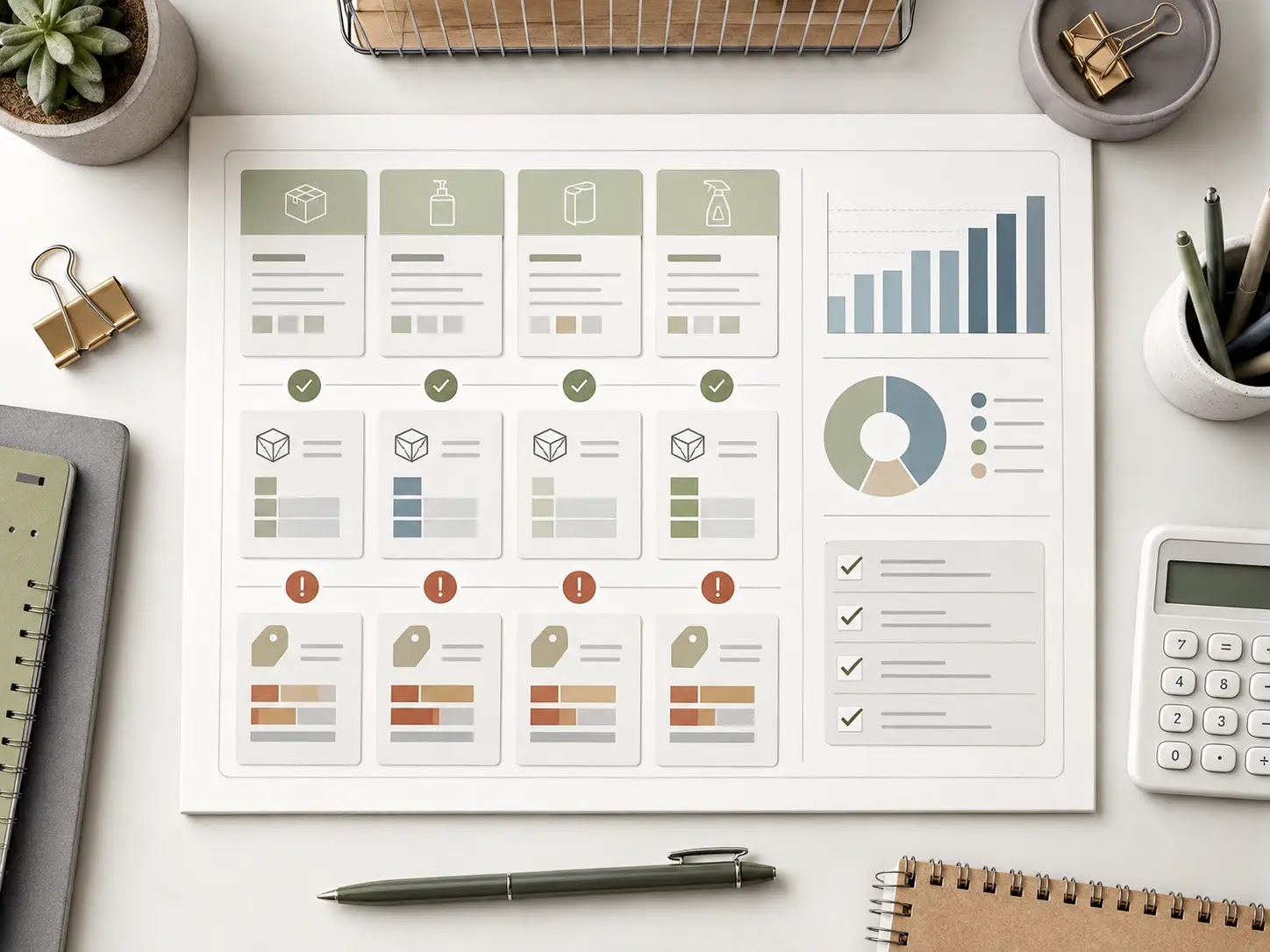
What tradeoffs and verification checks matter before you lock the KPI cadence?
For vending machine owners, the main planning tradeoff is speed versus overhead. A tighter KPI review cadence can surface stockouts, machine faults, route inefficiencies, and revenue drift faster, but it also takes more owner or manager time. A looser cadence reduces reporting burden, yet it can delay restock changes, repair decisions, or commission reviews that affect machine uptime and cash flow.
That makes the real question less about “how often” in the abstract and more about which assumptions are stable enough to review on a schedule and which need exception-based checks. Route mileage, spoilage, repair frequency, location commissions, software feeds, and vendor fulfillment terms can all change the cadence you can support without losing control of the operation.
Scenario panel: where cadence usually breaks first
If a route has inconsistent machine uptime, manual inventory counts, or slow supplier response, a monthly review may be too late to catch avoidable losses. If the route is stable and software is reliable, weekly exception reviews plus a monthly performance review may be enough for planning.
The planning goal is to match review frequency to operational risk: the less predictable the route, the more the owner should rely on short-cycle checks and documented exception handling.
| Planning risk | Why it matters in vending | Assumption affected | How to verify |
|---|---|---|---|
| Stockouts between reviews | Lost sales and weaker location satisfaction can appear before the next scheduled check. | Restock frequency and minimum par levels | Compare sales logs, shelf counts, and route notes across several review cycles. |
| Machine downtime | Repairs or service delays can suppress revenue until someone flags the issue. | Service response time and maintenance reserve | Review repair tickets, technician turnaround, and downtime notes from actual machines. |
| Route mileage creep | Extra travel time can raise labor and fuel load even when sales look steady. | Route density and stop sequencing | Map actual stops, drive times, and restock times from current routes. |
| Location commission pressure | Higher commissions can change unit economics even if gross sales are acceptable. | Net margin by location | Confirm signed location terms and test margins using the current commission structure. |
| Software or data gaps | Inaccurate reporting can hide true sales, inventory, or machine status. | Reporting reliability and review cadence | Reconcile system reports with cash, product pull counts, and spot checks. |
Local verification note: Local rules, costs, vendor terms, lease terms, and financing conditions vary by market and should be checked with current local sources. Treat the cadence as a planning assumption, not a fixed rule, until you verify the machine, route, and location specifics in your market.
Once these risks are documented, the final checklist can turn them into a practical operating rhythm for owners, route staff, and vendors, with each KPI tied to a clear action and review owner.

What should owners do next after setting the KPI review cadence?
For a vending machine operator, the cadence only works if it changes decisions. Daily checks should surface machine exceptions, weekly reviews should keep inventory and route execution tight, and monthly reviews should confirm whether labor, mileage, repairs, commissions, and cash flow still fit the route plan.
The practical goal is not more reporting. It is a clear rhythm for the few KPIs that affect uptime, fill accuracy, and working capital.
| Planning item | Ready when... | Why it matters |
|---|---|---|
| Daily exception review | Missed fills, jams, payment issues, and outages are assigned to a person the same day | Keeps service gaps from turning into recurring revenue loss |
| Weekly route review | Inventory, mileage, and machine-level sales are compared against the route plan | Shows whether route density and stocking logic are holding up |
| Monthly performance review | Repairs, commissions, labor, and cash needs are reviewed together | Helps confirm whether the route is still financially workable |
| Source-of-truth reporting | Sales, service logs, and stock counts come from one consistent system | Reduces confusion when you are planning staffing, funding, or expansion |
| Working capital check | You know what stock, service, and repair timing do to cash demand | Supports launch readiness and avoids overcommitting early cash |
What should you verify before you lock the cadence?
- Assign one owner for daily exception review, one for weekly route review, and one for monthly reporting.
- Confirm which machines, stops, or routes create the most service issues or restocking variance.
- Set the reporting source for sales, inventory, repairs, and mileage so the team uses the same numbers.
- Check vendor terms, commission structures, and service obligations before finalizing review timing.
- Compare the cadence against staffing capacity, route length, and how often machines need replenishment.
- Run one full review cycle before relying on it for expansion, acquisition, or lender conversations.
Practical bridge: If this decision is becoming part of a launch plan, acquisition memo, or lender package, a business plan, financial model, pitch deck, checklist, and startup toolkit can help organize assumptions, compare scenarios, and document the plan for partners, lenders, landlords, or advisors.


