
Vending Machine Cash Flow Forecast for Financing
A practical U.S. planning guide for vending machine cash flow forecast for financing, built for founders, buyers, and operators comparing assumptions before committing capital.


What does a vending machine cash flow forecast need to show for financing?
For a U.S. vending machine startup, route purchase, or small-scale expansion, the forecast needs to show whether machine-level cash inflows can cover inventory restocking, commissions, service and repairs, route mileage, software, and overhead before cash gets tight. Lenders and other capital sources usually care less about a simple sales estimate and more about whether the assumptions are documented, realistic, and connected to working capital needs.
The practical question is not just “can the machines sell?” It is “can the business survive the ramp period, replace product on schedule, handle downtime, and still support the debt or investor capital you are asking for?” That means the forecast should be built around location quality, route density, product mix, payment mix, and operating cadence rather than a single top-line number.
| What the reader is deciding | What must be verified locally |
|---|---|
| Whether the forecast is strong enough to support financing or self-funding | Location terms, actual machine costs, service coverage, local pricing, commissions, and current vendor terms |
| Whether the business can carry itself through the early operating period | Restocking frequency, route mileage, repair exposure, payment processing setup, and starting working capital needs |
- Lease or placement terms, including any location commission or revenue-share structure
- Equipment cost, delivery timing, and whether you are buying new, used, or financed machines
- Labor assumptions for stocking, collection, service, and route management
- Menu economics, including product mix, spoilage or shrink risk, and pricing at each location
- Permits, site permissions, and any location-specific operating requirements
- Working capital for inventory, fuel, repairs, software, and payment processing
- Funding readiness, including how clearly the assumptions support a pitch deck or lender package
Next, the practical framework will show which inputs to collect first and how to organize them into a financing-ready forecast.
How should a vending machine founder turn operating assumptions into a financing-ready forecast?
For a U.S. vending machine startup, acquisition, or route expansion, the cash flow forecast should be built from operating assumptions that a lender, partner, or investor can trace: machine count, location performance, product mix, commissions, route mileage, repairs, software, and working capital. The goal is not just to project revenue, but to show how the business converts placements and collections into usable cash.
What planning inputs matter most before you build the model?
| Planning area | Question to answer | Input to collect | Model impact | Verification source |
|---|---|---|---|---|
| Machine count and mix | How many machines are in service, and what type is each one? | New or used units, snack/drink/specialty mix, expected installation timing | Drives capital spending, revenue capacity, and maintenance assumptions | Vendor quote, purchase agreement, fleet list, installer estimate |
| Location economics | What does each placement contribute after any commission or revenue share? | Location type, foot traffic estimate, commission terms, service schedule needs | Changes gross sales, occupancy cost, and location-level cash flow | Signed location agreement, site notes, operator history, owner communication |
| Sales assumptions | What does a realistic weekly or monthly sales range look like by machine? | Historical sales by route or comparable location, seasonality pattern, product mix | Determines top-line revenue and working capital timing | Sales reports, bank deposits, telemetry records, comparable route history |
| Cost of goods sold | What products will be stocked and what margin is expected? | Wholesale product cost, shrink, spoilage, product assortment, vendor terms | Affects gross margin and cash needed for inventory replenishment | Supplier invoices, purchase orders, inventory counts, vendor price sheets |
| Route labor and mileage | How much labor is needed to service the route? | Owner labor time, hourly wage if hired, route miles, fuel, vehicle use | Changes operating expense and cash burn during launch | Route map, service logs, mileage tracker, wage assumption sheet |
| Repairs and maintenance | What level of ongoing repair spending should be expected? | Machine age, service history, parts replacement needs, technician rates | Impacts operating cash flow and reserve planning | Inspection notes, technician invoices, equipment condition review |
| Software and payments | What systems are needed to monitor sales and collections? | Telemetry, cashless payment fees, route management software, processing terms | Influences recurring overhead and cash collection timing | Software subscription quote, processor agreement, feature list |
| Inventory working capital | How much cash is tied up in stocked product? | Opening inventory, reorder frequency, supplier minimums, lead times | Determines cash tied up between purchases and collections | Opening inventory list, supplier terms, replenishment schedule |
| Buildout and setup | What must be spent before the first sale? | Machine delivery, setup, transport, minor repairs, signage, permit-related costs if applicable | Creates startup cash needs and funding gap timing | Quotes, invoices, landlord requirements, contractor estimates |
| Funding structure | How will the startup or acquisition be financed? | Owner equity, seller financing, equipment debt, working capital reserve | Changes monthly debt service and cash cushion | Lender term sheet, seller proposal, capital stack summary |
What workflow should turn those inputs into documented assumptions?
- Separate each machine or location into its own assumption line so sales, commission, and service costs can be reviewed individually.
- Collect current operating evidence: route reports, sales deposits, supplier invoices, machine condition notes, and location terms.
- Classify every assumption as verified, estimated, or unknown so the financing package shows what is supported versus what still needs confirmation.
- Build revenue from placement count and location-level sales ranges, not from a single company-wide average that hides weak sites.
- Model inventory purchases, spoilage or shrink, and replenishment timing so cash outflow reflects real restocking needs.
- Include route labor, mileage, fuel, repair reserve, software, and payment-processing costs as recurring operating items.
- Test launch timing: if placements ramp over several weeks or months, show how that changes working capital and monthly burn.
- Document the source for each assumption so the business plan, financial model, and pitch deck all use the same numbers.
Which assumptions usually need the most scrutiny in a financing package?
- Sales per machine by location type, especially where history is limited or the route is being acquired.
- Commission or revenue-share terms at each site, since small changes can materially affect cash flow.
- Inventory turns and product mix, because product cost and stock levels affect cash tied up in the business.
- Repair frequency and replacement timing for older machines or mixed-condition acquisitions.
- Route labor assumptions, especially if the owner will not personally service every stop.
- Up-front working capital, since vending businesses often need cash for product, transport, and operating slack before collections stabilize.
Use this framework to document the assumptions before you move into scenario math, downside cases, and financing sensitivity. The next block covers how those inputs affect monthly cash flow, break-even pressure, and lender-facing tradeoffs.
What does the cash flow forecast need to prove for financing?
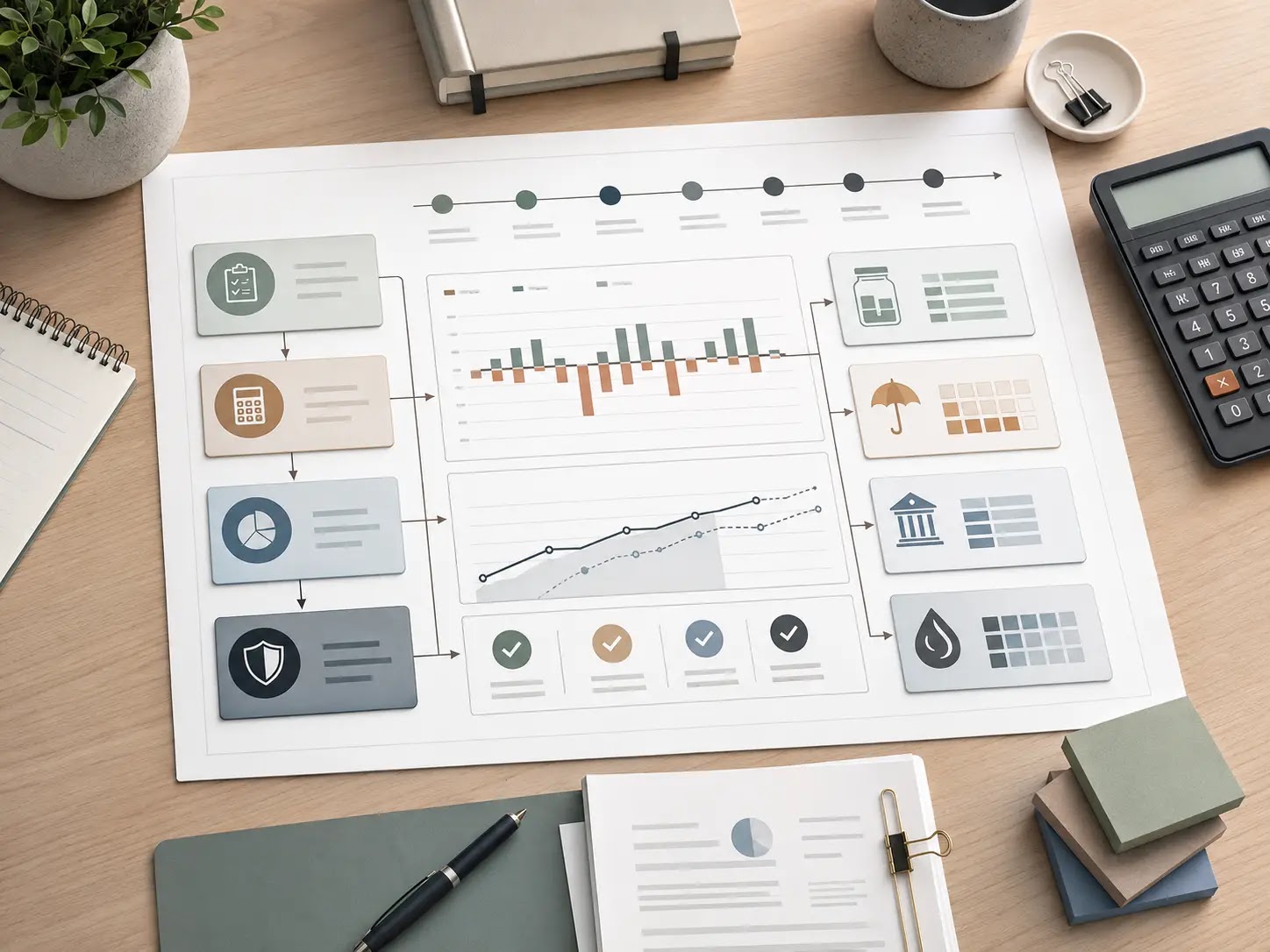
A lender, seller, or equity partner usually wants more than a revenue estimate. For a vending machine deal, the forecast has to show that machine purchases, route mileage, inventory, commissions, repairs, software, and labor can still leave enough cash for debt service and working capital after launch.
Risk lens
Vending can look attractive on paper when gross sales are mapped to each machine, but cash flow can tighten quickly if routes require more driving, more restocking, higher location commissions, or faster repairs than planned. Financing readiness depends on whether the model survives those pressures, not just whether it shows top-line sales.
Assumption lens
The most important inputs to verify are actual machine quotes, inventory mix, location commissions, service frequency, route mileage, repair reserve, and any vendor or financing payment timing. If those inputs are stale or optimistic, the forecast can overstate cash available for growth or repayment.
Planning calculator inputs to pressure-test
| Planning item | What to enter | Formula or decision use | Why it matters |
|---|---|---|---|
| Startup cash needed | Verified quotes for machines, refurbishment, delivery, install, initial inventory, software setup, deposits, and any local launch costs | Total launch uses | Shows how much capital is required before first sales arrive |
| Monthly sales by machine or route | Expected unit sales by location, machine type, and product mix | Monthly revenue estimate | Sales quality varies a lot by placement, traffic, and product mix |
| Monthly cash outflow | Inventory restock, commissions, fuel or mileage, repairs, software, labor, and debt service | Cash burn estimate | Route density and labor coverage often decide whether the route is scalable |
| Net monthly cash flow | Monthly sales minus monthly cash outflow | Revenue less cash expenses | Helps test whether the business can self-fund replenishment and repayment |
| Break-even sales | Fixed monthly costs and contribution margin per sale | Fixed costs divided by contribution margin rate | Useful for checking how much sales volume is needed before the route turns cash-positive |
| Cash runway | Available working capital and average monthly net burn | Working capital divided by burn | Shows how long the business can operate if sales ramp slower than expected |
| Funding gap | Total launch uses minus confirmed cash sources | Amount still to finance | Tells you whether the deal needs more equity, debt, seller support, or a smaller launch scope |
How scenario pressure changes the financing answer
| Scenario | Assumption shift | Cash flow effect | Funding takeaway |
|---|---|---|---|
| Base case | Expected route mileage, normal repair reserve, planned inventory mix, and standard commission terms | Model should cover operating cash needs with a modest cushion | Useful for lender conversations if assumptions are documented and supportable |
| Downside case | Lower sales, higher restocking trips, more repair events, or slower collections | Cash runway shortens and funding gap can widen | Highlights whether extra working capital or smaller launch scope is needed |
| Upside case | Better machine placement, tighter route density, or stronger product mix | More cash available for debt service and replenishment | Useful, but should not drive the financing plan unless backed by verified placement data |
For a funding-ready package, keep the same assumption set across the cash flow forecast, pitch deck, and startup checklist so reviewers can see the operating logic without chasing mismatched numbers.
What should you do next before financing a vending machine cash flow forecast?
If the forecast already includes machine count, route mileage, inventory turns, commissions, repairs, software, and working capital, the next step is to pressure-test those assumptions against real local quotes and placement terms. For financing, the goal is not a perfect forecast; it is a documented one that shows how cash moves through the route and where the cushion comes from.
In practical terms, a lender, partner, or buyer will want to see that the route can support startup spending, monthly operating costs, and any debt or lease obligation without relying on best-case sales alone.
| Readiness check | What to confirm | Why it matters |
|---|---|---|
| Route assumptions | Machine locations, service frequency, mileage, and refill schedule | Sets the core sales and operating cost assumptions |
| Cost structure | Inventory, commissions, repairs, software, fuel, and other recurring costs | Shows whether cash flow stays positive after operating expenses |
| Working capital | Cash needed to stock machines and cover early operating gaps | Helps prevent a launch that runs out of cash too early |
| Funding structure | How startup spending, debt, and owner capital are split | Clarifies whether the forecast can support financing terms |
| Scenario coverage | Base, downside, and slower-start cases | Shows how the plan behaves if sales ramp more slowly than expected |
Next planning steps
- Lock in your machine count, route map, and service schedule.
- Gather current vendor quotes for equipment, inventory, software, repairs, and insurance.
- Separate one-time startup costs from monthly operating costs.
- Build a cash flow view that shows timing, not just revenue.
- Test the forecast with a slower-sales scenario and a higher-cost scenario.
- Document every assumption so the numbers can be reviewed by a lender, partner, landlord, or advisor.
- Update the forecast whenever placement terms, route size, or supplier pricing changes.
Practical bridge: a business plan, financial model, pitch deck, checklist, and startup toolkit can help organize assumptions, compare scenarios, and document the plan for partners, lenders, landlords, or advisors. Use them to keep the financing discussion grounded in route-level cash flow, not just machine purchase price.
Final takeaway: for a U.S. vending machine founder or buyer, financing readiness comes down to whether the route’s cash flow can cover inventory, mileage, repairs, commissions, software, and working capital with enough room for a slow start.


